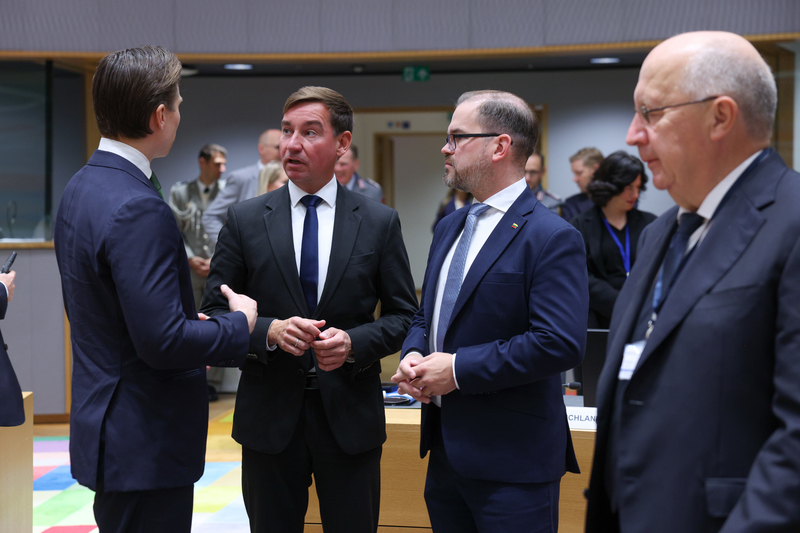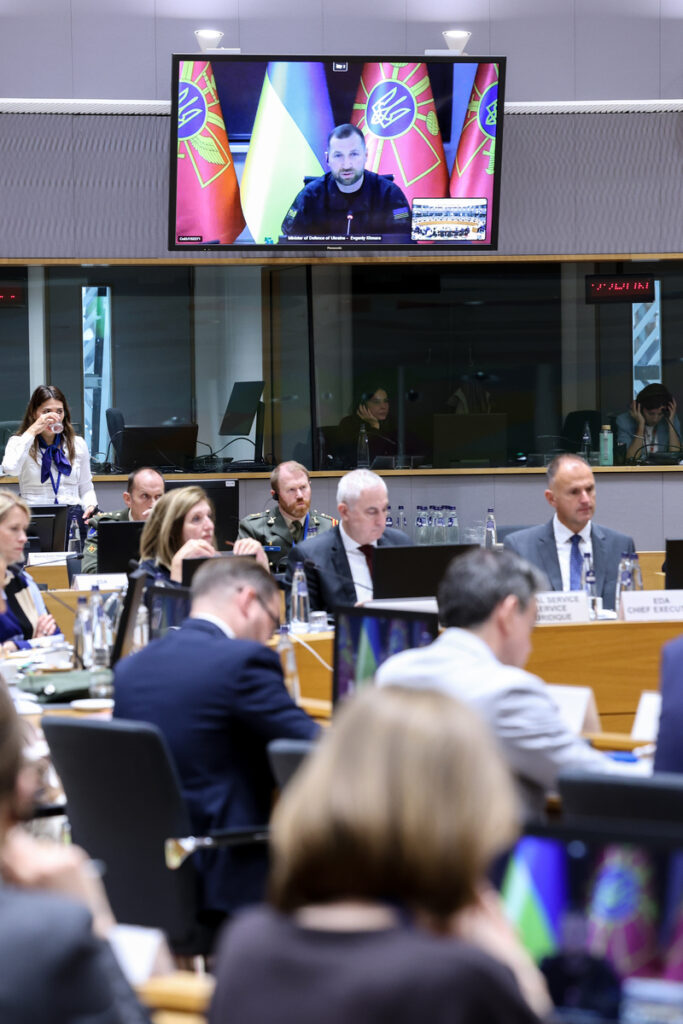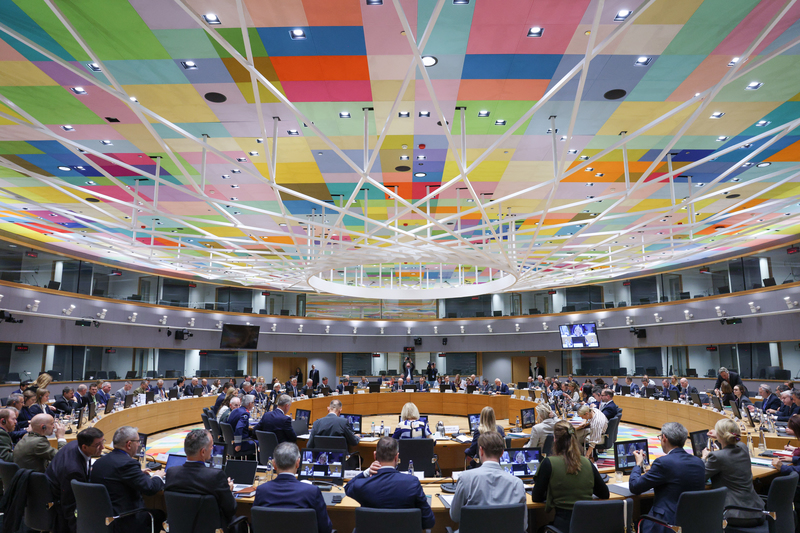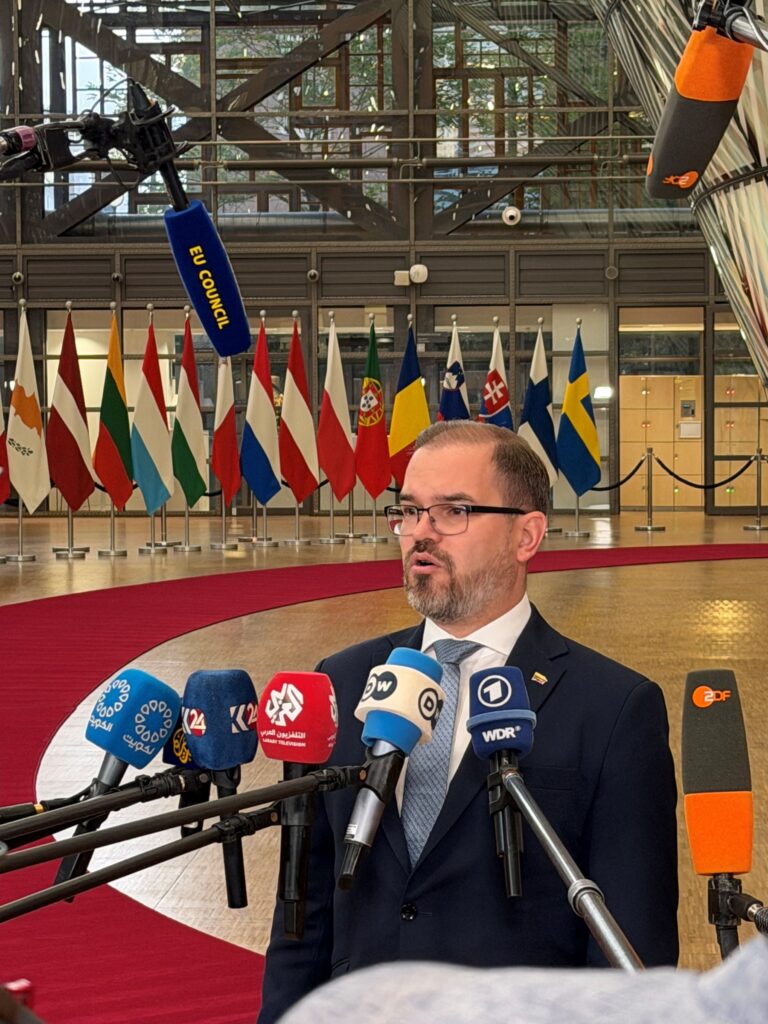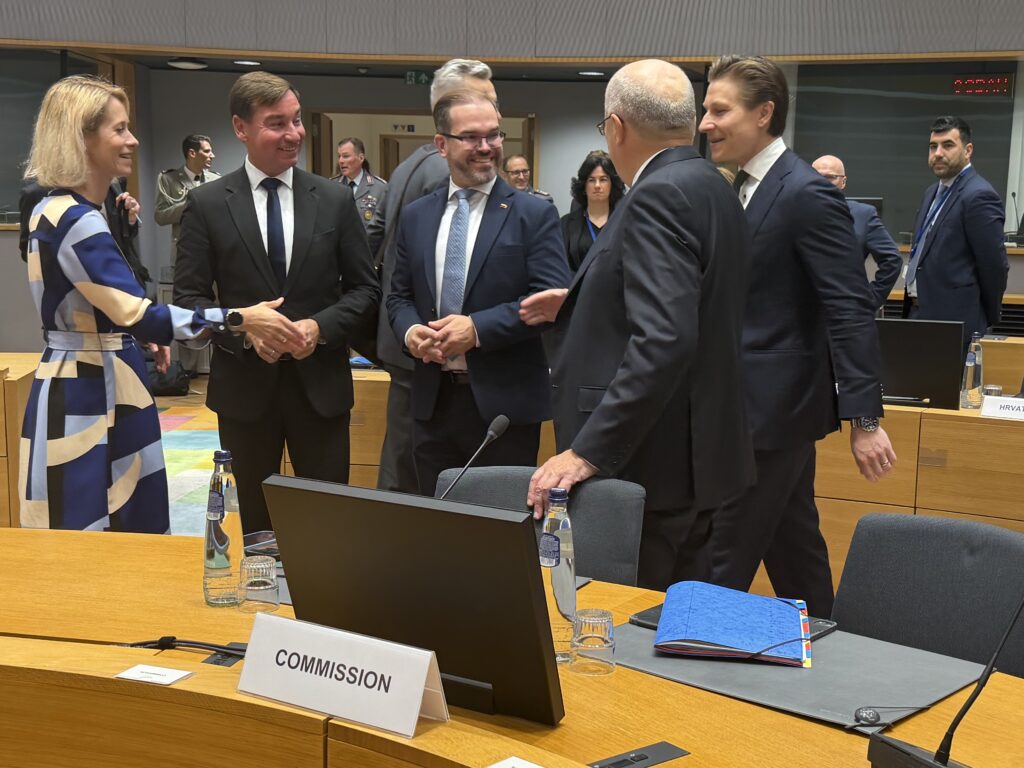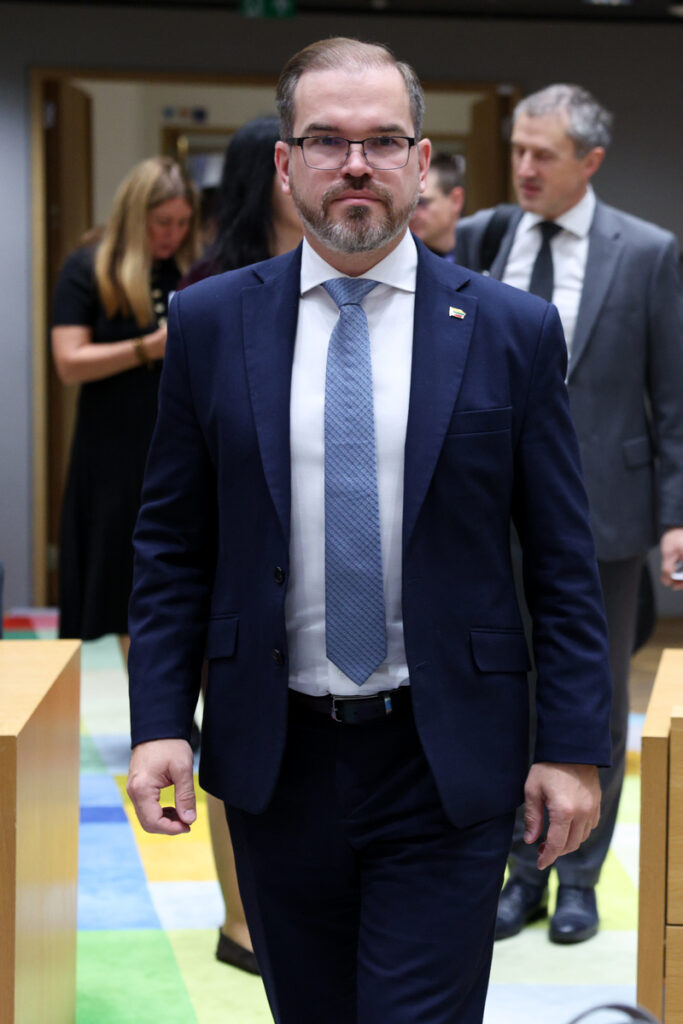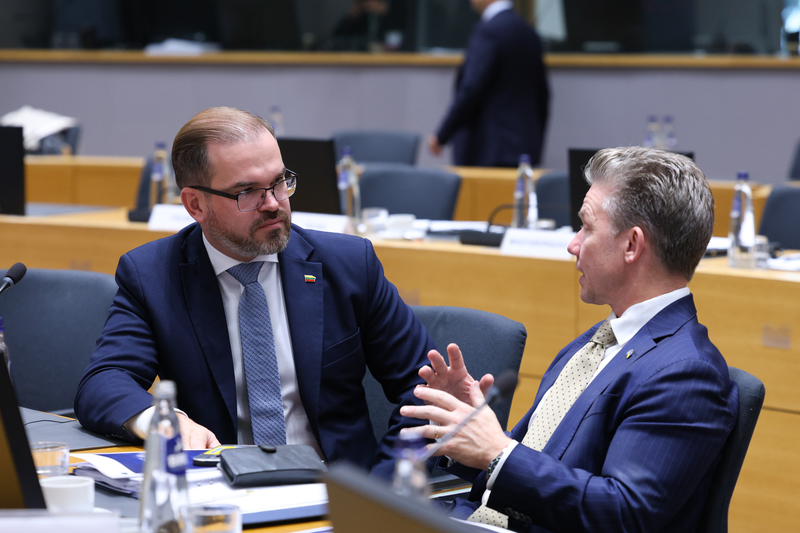
Minister of National Defence Robertas Kaunas took part in the EU Foreign Affairs Council (Defence) in Brussels on September 28. The meeting addressed stepping up the EU military assistance to Ukraine, russia’s hybrid campaigns and their escalation, and the security situation in the Middle East, as well as its implications for European security and defence.
The EU Defence Ministers agreed to fund the Eastern Flank Watch initiative, which will strengthen the eastern border of the European Union, as well as member states’ ability to respond to military and hybrid threats.
“Lithuania and the other Eastern and Northern European member states have been consistently working for this decision. The Eastern Flank is Europe’s initial defence line which requires unified security system –from early warning to sensors and air defence, counter-UAV and counter-hybrid campaigns of russia. The EU will provide over EUR 62 million in funding in the short-term, which will support a significantly accelerated implementation of these decisions,” said Minister R. Kaunas.
According to Minister, Lithuania will seek to secure a sufficient and sustainable funding for the programme in the next Multiannual Financial Framework (2028-2034).
Lithuania is one of the member states that initiated the Eastern Flank Watch project. Alongside Finland, Estonia, Latvia, Poland and Sweden, Lithuania presented a joint project proposal to the European Commission in May this year. The number of participating member states later grew to 18, and the European Commission included the initiative in its list of recommended European Defence Industry Projects of Common Interest (EDPCI).
The Foreign Affairs Council also focused significantly on stepping up military assistance to Ukraine, including the EU loan to Ukraine mechanism which enables the war-torn country to obtain the vital weaponry.
“The mechanism of the EU loan to Ukraine works and already boosts Ukraine’s ability to defend itself against the aggression. What matters the most next is speed and flexibility. If the critically needed weaponry or equipment is not available in Europe or the waiting time is unacceptable, we need to use third-country options. There must be only one priority – to provide Ukraine with the capabilities it needs on the battlefield,” Minister said.
R. Kaunas also underscored that Lithuania would respect its long-term commitment to allocate 0.25% of GDP in support to Ukraine. According to Minister, in the face of the approaching winter, the military assistance should sustain Ukraine’s critical capabilities – drones, ammunition, and air defence. According to him, member states also need to weigh all the possibilities to step up the assistance.
When speaking about russia’s hybrid campaigns, Minister welcomed the fact that border protection against hybrid threats alongside with conventional threats is not just Lithuania’s national interest but also an increasingly more important EU priority. Also, he underscored the effectiveness of the EU sanctions, especially targeting russia’s shadow fleet, and their importance as a strong European response to the russian aggression.
The EU Defence Ministers also addressed the review of the defence procurement regulatory mechanisms.
“The current security situation requires defence procurement to be conducted at maximum speed. Therefore, we support the decisions to simplify international procurement regulations, shorten the procedures and allow for flexible exceptions where necessary. The regulations’ review will be among Lithuania’s priorities during the Presidency of the Council of the European Union. We also support the measures for promoting a closer industrial cooperation and strengthening the European defence industry capabilities,” said R. Kaunas.