


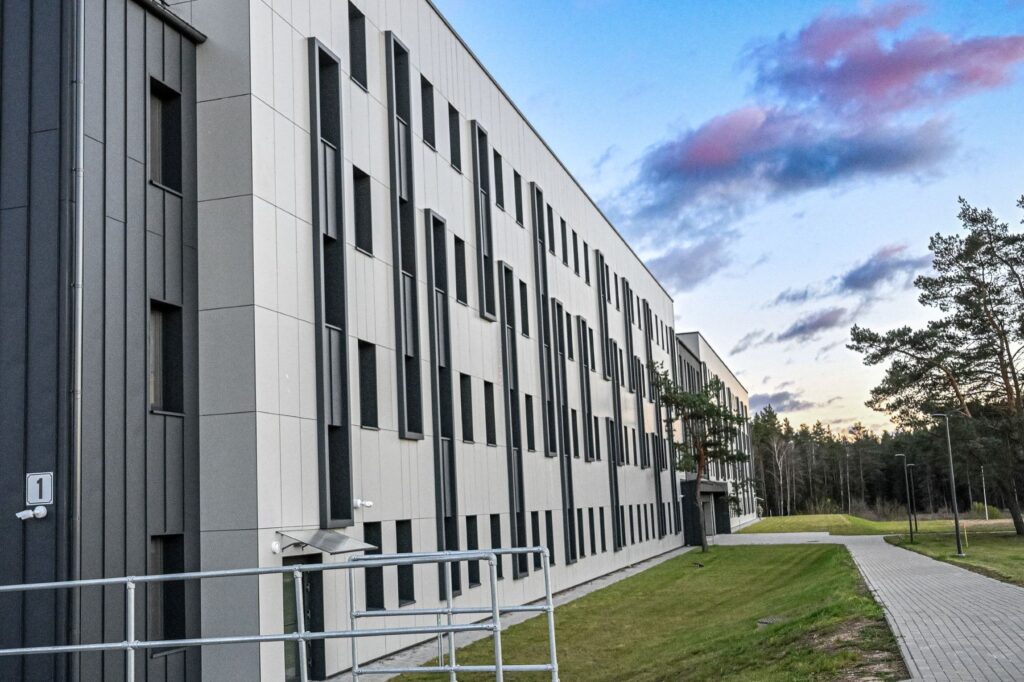
Two battalions of the 1st Infantry Division, U.S. Army—armour and engineer—have been assigned for deployment in Lithuania. By 2030, Lithuania plans an additional investment of over EUR 55 million in the training area infrastructure for the service and training of U.S. forces.
“The U.S. military presence in Lithuania is an important signal of collective defence commitments; therefore, Lithuania is developing the best conditions possible for the lodging and training of our strategic Allies, and will continue to do so in the future. The earlier decision to expand the Host Nation Support Package to full coverage of all expenses of the U.S. presence in Lithuania is a symbol of Lithuania’s commitment to NATO collective defence and deterrence. The infrastructure at the Pabradė Training Area is one of the most advanced military complexes in the Baltic states, used by our national forces as well,” says Minister of National Defence Robertas Kaunas.
The training part of the Area infrastructure alone will receive over EUR 35 million by 2030. That includes the expansion of firing ranges and manoeuvre territories, improved training conditions, and access to electronic warfare, UAV, and other technology systems.
The infrastructure needed for service has already been built at the General Silvestras Žukauskas Training Area. This covers barracks, a multifunctional centre with recreation spaces and classrooms, a refurbished mess hall, military equipment maintenance shops, helipads, and kennels.
Such infrastructure supports the daily service, exercises, and high unit readiness of the hosted American forces. Lithuania consistently follows the Host Nation Support Package investment plan. Over EUR 20 million is planned to be invested in the Pabradė Training Area by 2029.
The U.S. Army units rotated to Lithuania since 2019 are a significant boost to the security of NATO’s Eastern Flank, deterrence, and the Allied ability to respond to potential threats swiftly and in a coordinated manner. Comprehensive investment in military infrastructure, along with the persistent Allied military presence in Lithuania, enhances the overall deterrence in the Baltic region and contributes to NATO’s collective defence.


