


Membership in NATO is one of the key pillars of Lithuania’s security. The Allied presence in Lithuania is a critical element to deter Russia and defend against Russia’s aggression if needed.
Enhanced Forward Presence Battle Group in Lithuania
At the NATO Summit in Warsaw in June 2016, the Allies decided to establish an enhanced forward presence in the Baltic States and Poland from 2017.
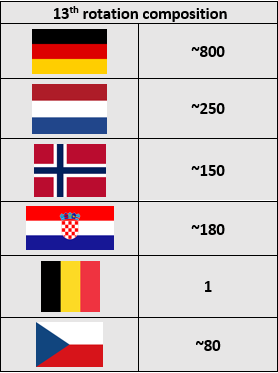
The enhanced Forward Presence Battle Group (eFP BG) in Lithuania is led by framework nation Germany with Netherlands, Norway, Belgium, Czech Republic, France, Croatia, Luxembourg and Iceland as contributing nations. Since its establishment, more than 15 thousand troops have been on deployment to Lithuania.
The Battle Group is based in Rukla, about 100 kilometres northwest of capital Vilnius.
The eFP BG is assigned to and falls under the command of the Mechanised Infantry Brigade Iron Wolf of the Lithuanian Armed Forces.

Iron Wolf, Resolute Stallion, Saber Strike, Flaming Thunder or Eager Leopard combat exercises are a recurring element of the eFP BG in Lithuania. The Battle Group uses all of the military training areas in Lithuania for its intensive exercise and training cycle.
The core of the Battle Group is formed by mechanized and infantry forces with an addition of combat support for NBC (nuclear, biological, chemical) defence, reconnaissance and artillery. This makes the eFP BG in Lithuania a reinforced battalion.
NATO brigade in Lithuania led by Germany
After Russia launched a full-scale war against Ukraine in February 2022, the Allies made transformative decisions on NATO’s deterrence and defence at the Madrid Summit in June 2022. NATO decided to strengthen the forward defences, which includes enhancing the battlegroups in the eastern part of the Alliance up to brigade level, develop new generation of military plans, and substantially increase the reinforcement forces among others.
In June 2022, the President of the Republic of Lithuania Gitanas Nausėda and the Chancellor of the Federal Republic of Germany Olaf Scholz announced in a Joint Communiqué that in addition to the current and reinforced enhanced Forward Presence Battle Group already in place Germany was ready to lead a robust and combat-ready brigade in Lithuania dedicated to deter and defend against Russia’s aggression.
Since September 2022, a Forward Command Element of the German brigade has been deployed in the country. The brigade regularly exercises the rapid deployment to Lithuania and the immediate transition to the defence in an intense exercise cycle. In June 2023, more than 1,000 troops and 320 military vehicles of the German 41st Brigade participated in a bilateral exercise Griffin Storm in Lithuania.
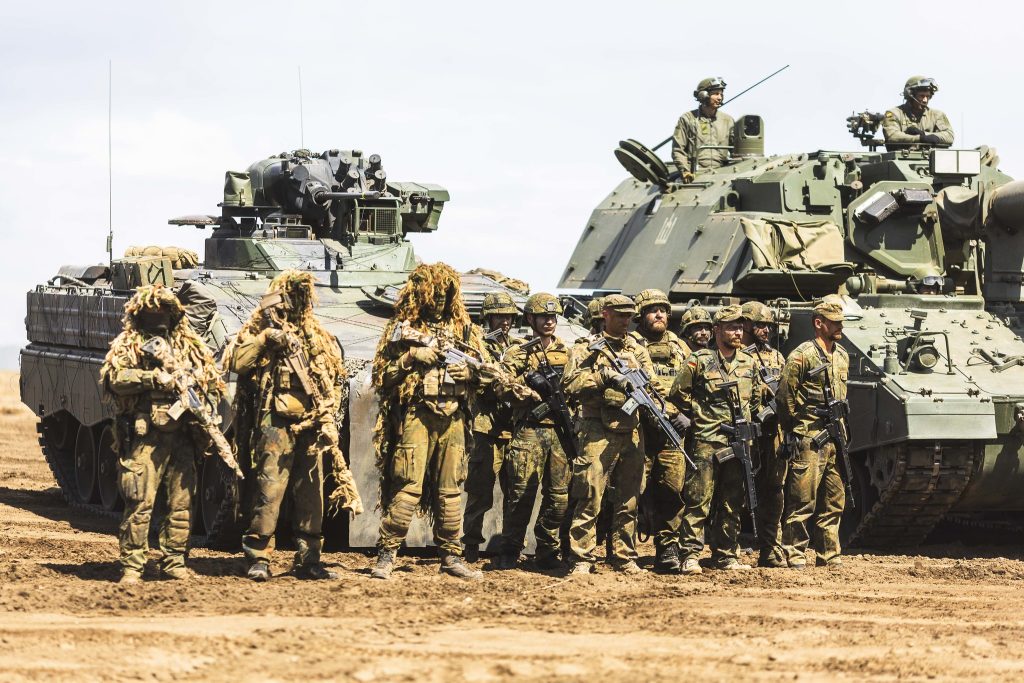
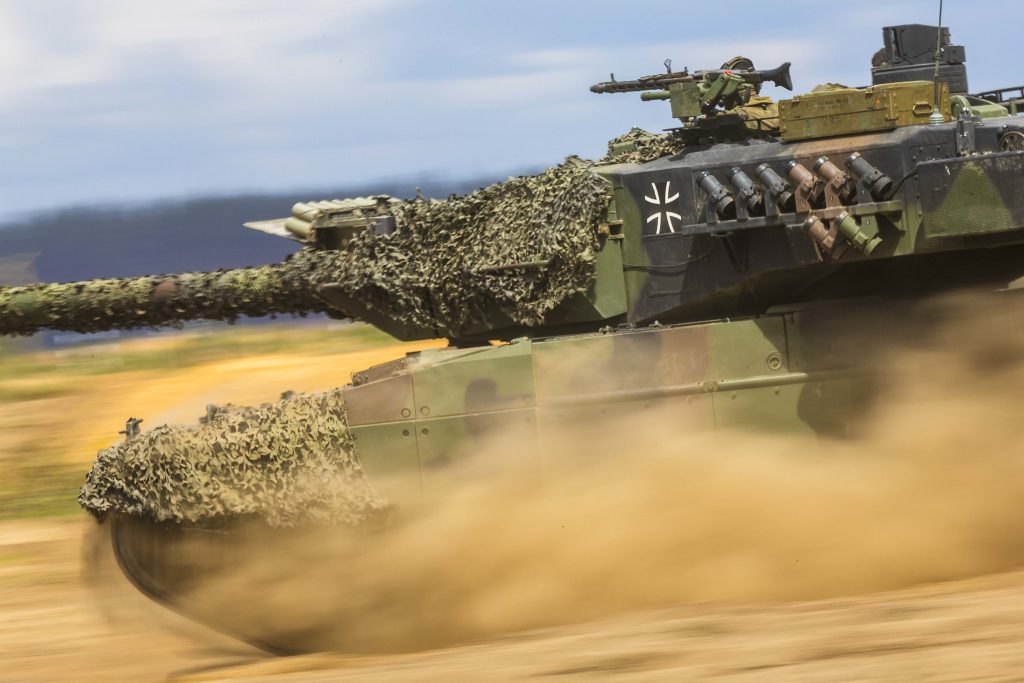
On 26 June 2023, in Vilnius, Minister of Defence of the Federal Republic of Germany Boris Pistorius announced that Germany will station its brigade in Lithuania on a permanent basis under the NATO framework. This commitment by Germany will enhance NATO’s deterrence posture on the Eastern part of NATO and will strengthen the deterrence posture.
A Joint Working Group established between the Ministries of Defence has been working on the implementation of this decision. Lithuania is committed to swiftly develop needed infrastructure to be able to station the brigade on a permanent basis in 2026.
Currently, the German Army’s 21st Brigade is dedicated for the defence of Lithuania. The first troops of this brigade are set to arrive in 2024, with the entire German brigade expected by 2027. The primary agreed deployment locations for the German brigade are Rūdninkai and Rukla, while the troops, along with their families, will be accommodated in Vilnius and Kaunas.
In December 2023, the Lithuanian-German Action Plan is planned to be signed, outlining the intentions of both countries regarding the deployment of the German brigade in Lithuania and the subsequent steps for its full deployment.
The current key tasks for receiving the German brigade include properly establishing civil infrastructure, including all necessary services for the arrival of troops and their families. Additionally, efforts are underway to strengthen transport services, including roads, trains, and planes. These services are crucial not only for the German troops stationed in Lithuania but also for Lithuanian businesses and the entire population of Lithuania.
Preparations to host the Brigade will be coordinate at the highest level by a Commission formed by the Government and headed by the Prime Minister. It will include Ministers of National Defence, Finance, Transport and Communion, Education, Science and Sport, Foreign Affairs and First Deputy Chancellor of the Government of Lithuania. The Commission will be responsible for core solutions of providing civilian infrastructure and services for the German Brigade. The Ministry of National Defence will remain at the helm of coordination of the deployment process of the German Brigade in Lithuania.
The Roadmap text is accessible via this hyperlink.
Lithuania as a host nation
As a host nation for Allied forces, Lithuania aims to ensure the best possible living and training conditions. In the period of 2023-2027, Lithuania will spend 1.1 billion euros on Host Nation Support, which includes the development of the infrastructure and training areas, procurement of necessary equipment and provision of services.
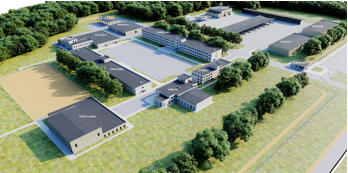
Currently, the main effort is to develop an infrastructure to station the German-led NATO brigade on a permanent basis. This includes projects in Rukla and Rūdninkai training area.
Several additional locations for the infrastructure to station the brigade have been also identified. Final locations will be agreed on by the Joint Working Group. Lithuania is committed to ensure the implementation of any necessary solutions to meet any other requirements arising from the German decision to station the brigade on a permanent basis.
Lithuania has been investing significantly in training infrastructure to ensure proper training conditions for national and Allied troops. The key developments include the following:
- Expansion of the Pabradė training area from 85 km2 to 176 km2.
- Expansion of the Gaižiūnai training area from 52 km2 to 101 km2.
- Rapid development of a newly established training area in Rūdninkai with the area of 170 km2.
Multiple projects to upgrade transportation infrastructure have been launched in 2023. They aim to improve military mobility across the country and to improve access to the military areas. These projects are partly financed from the funds collected under the Law on Temporary Solidarity Contribution.


