


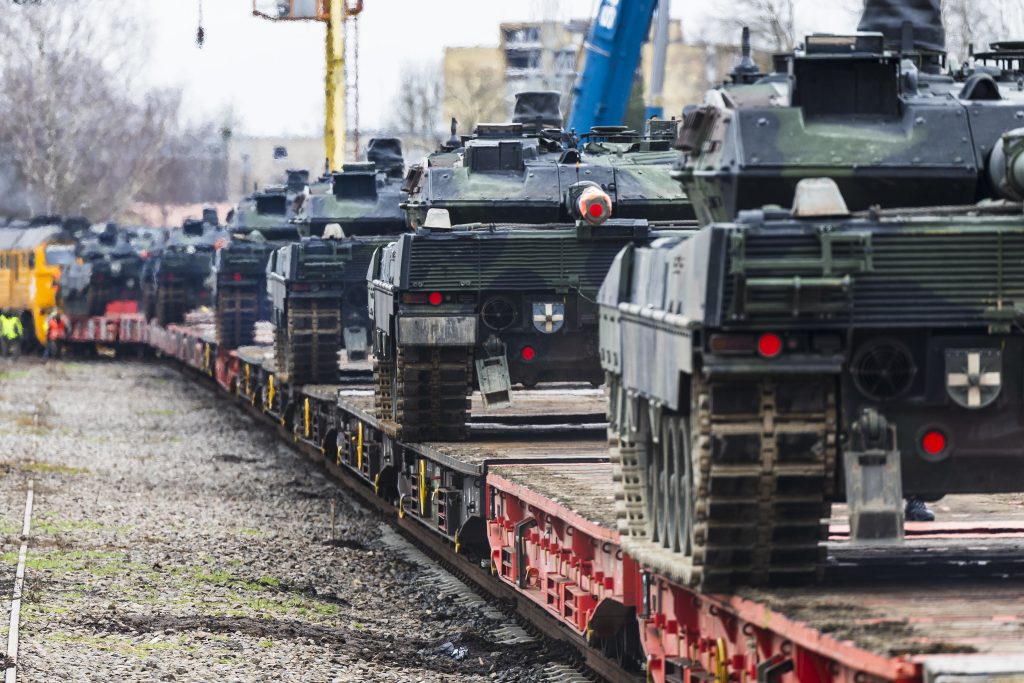
Military mobility is something viewed as one of the most critical components of modern defence. The ability to move military forces across EU member states speedily and free of obstruction rests on three key departments: capacity of physical infrastructure, pace of procedures, and digital security.
The European Commission has put out the Military Mobility Package taking a significant step in removing barriers for a more fluent military movement in Europe and strengthening deterrence and defence capabilities, particularly in the regions bordering Russia and Belarus. Lithuania supports the initiative and maintains that its comprehensive and coordinated implementation is critical for a quick, predictable and large-scale Allied force movement within the borders of Europe.
“The European Commission is looking to earmark approx. EUR 17.6 billion for military mobility in 2028–2034, which is a tenfold of the previous fiscal period. Lithuania aims to fully avail of the proposed measures and to continue consistently developing the strategic infrastructure of military mobility corridors thus strengthening national and regional security,” says Minister of National Defence Robertas Kaunas.
The Ministry of National Defence is putting together a military mobility plan focussed on adjustment of civilian infrastructure to also support military needs. That entails developing dual-use infrastructure needed to do both, host Allied forces and ensure national defence.
The developed new regulation will have to ensure a tight coordination between institutions, therefore the development of the common position of Lithuania is carried forward by the Ministry of National Defence, the Ministry of Communication and the Ministry of Finance. The new regulation also needs to be attuned with the initiatives already in force, including PESCO projects and agreements of the European Defence Agency (EDA),to prevent procedural duplication.
Lithuania has already introduced nationally the EU-agreed military mobility procedures concerning the transit permit issuance term for scheduled events set at five days, and in the event of other extraordinary circumstances – at 24 hours ahead of the event.
With that in mind, expectations are high that the developed EU-ranging system shall dwell on the best practices of member-states and shall not introduce new bureaucratic obstacles. The cooperation with NATO Allies and other strategic partners outside the EU is no less important for compatibility and effective coordination.
The Military Mobility Regulation proposed by the European Commission stipulates harmonization of legal basis across the EU to create conditions for a quicker movement of military personnel, equipment and Allied troops with heavy tactical equipment between member states.
The document proposes removal of regulation obstacles to inter-state military transport, a unified permit issuance system, simplified customs procedures, and prioritization of tactical transport. Also, creation of the European Military Mobility Enhanced Response System (EMERS) is proposed to provide for accelerated procedures and simplified access to infrastructure in case of an emergency.
Photo credit: Sgt Spc K. Kavolėlis/MoD


