


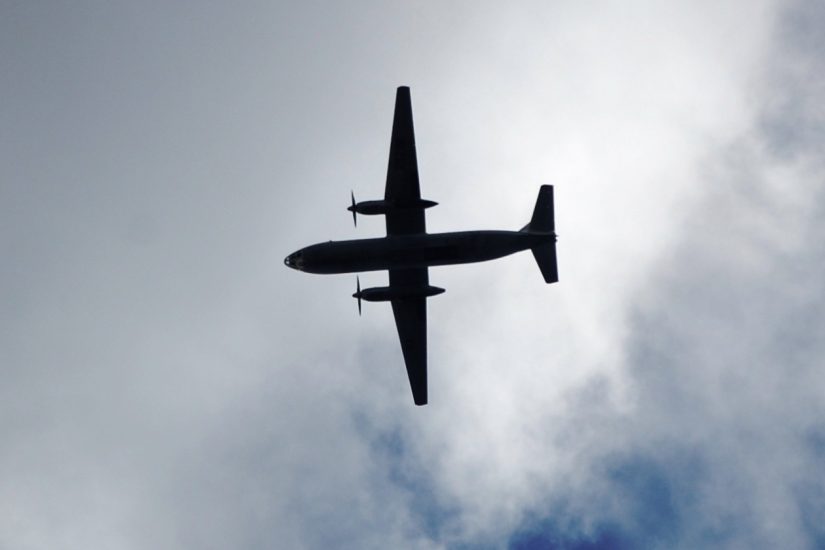
On July 22–26 arms control inspectors of Ukraine are visiting Lithuania. The experts are conducting a reconnaissance overflight over the territory of Lithuania in an AN-30B aircraft with specialised digital cameras of the Armed Forces of Ukraine on the basis of the Open Skies Treaty. Representatives of the Lithuanian Armed forces will be on board together with the Ukrainian inspectors during the flight to ensure the agreed flight plan is followed and the observation equipment certified according to the Open Skies Treaty requirements are used.
Ukraine also sent an arms control inspection team on the basis of provisions of the Vienna Document 2011 of the Organisation for Security and Cooperation in Europe (OSCE).
Aerial reconnaissance flights on the basis of the Open Skies Treaty are conducted in order to verify the arms control agreements in force are respected by the overflown country. The flights can be carried out over the whole territory of the country with exceptions for flight safety reasons only.
The Open Skies Treaty is an important international arms control instrument for strengthening mutual trust, transparency and openness among state-parties in military area. The Treaty binds the participants to host reconnaissance flights in specifically equipped and certified aircraft over their territories and gives the right to conduct such flights.
The Open Skies Treaty of the Organisation for Security and Cooperation in Europe (OSCE) was signed on 24 March 1992 in Helsinki at an OSCE Conference. The Seimas of the Republic of Lithuania ratified the Treaty on 9 December 2004 and the first observation flight of the territory of Lithuania was conducted in October 2005. To date, 34 OSCE countries are parties to the Treaty.
This is the second visit on the Basis of the Open Skies Treaty this year hosted by Lithuania. The first one was conducted by Russian and Belarusian arms control inspectors on July 8-12.
The Ukrainian inspectors will be able to visit military training areas (General Silvestras Žukauskas, Gaižiūnai, Brigadier General Kazys Veverskis) in the chosen regions of Vilnius, Rukla, Pabradė and Kazlų Rūda. According to the Vienna Document 2011 regulations, the visiting inspectors will also be able to fly over a selected area in a Lithuanian Armed Forces aircraft to make sure no military activities requiring prior notification are carried out. The Ukrainian inspectors will also pay a visit to the National Defence Volunteer Force Headquarters to familiarise with the specificity of voluntary service.
According to regulations of the Vienna Document 2011, the arms control experts of Ukraine will report to the members of the Organisation for Security and Cooperation in Europe on Lithuania’s compliance with provisions of the Vienna Document 2011 witnessed during the inspection.
This is the third visit by foreign arms control inspectors to Lithuania on the basis of the Vienna Document 2011 this year — arms control inspectors of the Russian Federation paid the visit in April, and Belarusian and Swedish experts paid the visit in June earlier this year. Lithuania has carried four inspections so far: in the Russian Federation twice, once in Georgia, and once in Ukraine.
The Vienna Document 2011 commits the signatory countries to conduct annual information exchange on their manpower, planned capability development and defence budgets on an annual basis, and to notify other Organisation for Security and Cooperation in Europe (OSCE) countries in advance of scheduled military activities of significant scope. The states also commit to accept a designated number of inspections and evaluation visits by other member states’ military inspectors in military units in their territories.
Photo credit: LITHAF


