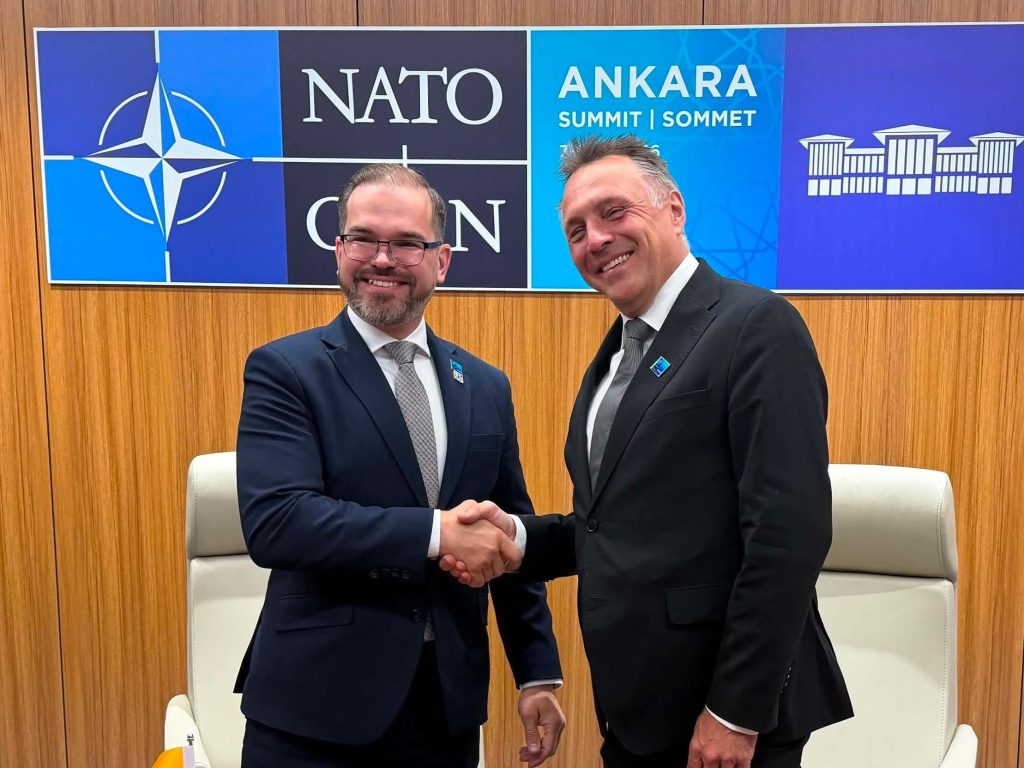
On the sidelines of the NATO Summit in Ankara, Türkiye, on July 8, Lithuania and Norway signed Memorandum of Understanding on cooperation in the standardised multirole warship programme developed in Norway. The document opens the opportunity for Lithuania to strengthen the naval industry and technology competence, adhere to the Allied programme already underway and conduct a sustained development of the Lithuanian Navy’s capabilities.
“As a maritime country, it’s important for Lithuania to build a long-term industrial and technological basis on the ground, besides updating the Navy’s platforms. Cooperation with Norway allows us to join a reliable programme already on track, sign up Lithuanian companies for shipbuilding and system integration work, and eventually, to obtain advanced maritime capabilities linked with air defence,” says Minister of National Defence Robertas Kaunas.
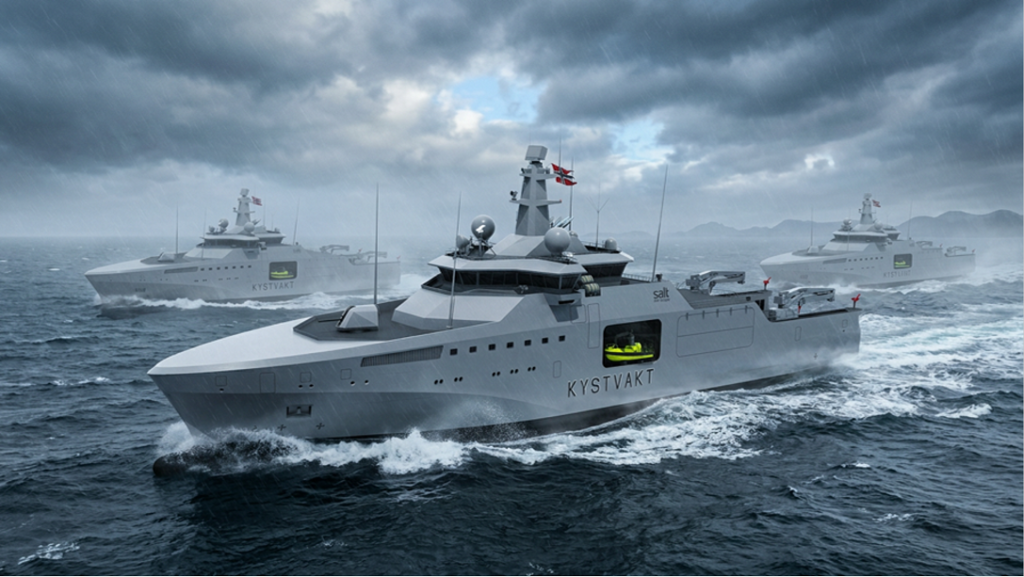
The essence of Norway’s standardised vessel programme is to create one unified modular platform apt for quick reconfiguration to match different operational needs, thus cutting exploitation and upgrading costs over the full ship’s life cycle, in replacement of more than 10 different vessel classes.
Depending on the modules, the same platform would be suitable for coastal and air defence tasks (the vessels could be mounted with the NASAMS air defence system already in use in Lithuania), C2 and release drones, carry out counter-drone defence, be an electronic warfare and reconnaissance platform, provide sea-borne fire support for land forces, lay naval mines or demine using modular search and neutralisation solutions, as well as to guard maritime communication routes, undersea and surface critical infrastructure, or fight enemy forces with anti-ship missile systems.
Lithuania has a requirement for four multirole modular ships and associated modular mine hunting and sweeping system capabilities. The purchase would support continuity of the Navy’s tasks, enhance NATO interoperability, and prevent capability gap after 2030.
For Lithuania, the cooperation primarily means a chance to strengthen our maritime industry, shipbuilding, system integration and technological competencies. At least 30 percent of the project value is planned to be based in Lithuania involving national shipbuilding and defence industry companies, as well as businesses providing hi-tech, sensors, communications, cable integration, pipelines, interior and other specialisations.
“We are not just talking acquisition of modern vessels. First and foremost, we are talking a long-term enhancement of resilience of the Lithuanian maritime defence industry, technological competencies and supply chains. We will work to engage Lithuanian companies in real shipbuilding, system integration, servicing and maintenance works,” notes Minister R. Kaunas.
Norway plans acquiring up to 28 standardised class vessels to replace most of the current platforms of the Royal Norwegian Navy. The programme rests primarily on standardisation and modularity that cut acquisition and exploitation costs in support of the required military efficiency ion the long run.
The signed memorandum is not the final procurement contract and is not binding financially or in terms of a commitment to buy. Rather, it sets out the guidelines and principles for cooperation, while the concrete model of procurement, structure of project management, scope of industrial cooperation, financial obligations and terms will come with later agreements and negotiations.
The following work of Lithuania and Norway will encompass coordination of technical requirements, assessment of the potential acquisition model, security solutions for industrial cooperation and security of supply chains, and options for involving the Lithuanian industry.
The current fleet of maritime platforms in the Navy’s disposition is nearing the retirement term, aged on average 32–48. Even if upgraded, part of the equipment would fail to match the operational needs of the country, while spare parts for some of the assets are increasingly difficult to supply. Design and building of new platforms takes years. Bearing in mind the schedule of the Norwegian programme, the time to take decisions on Lithuania’s participation is now.
Picture: courtesy of the Ministry of Defence of Norway
Photo credit: MoD