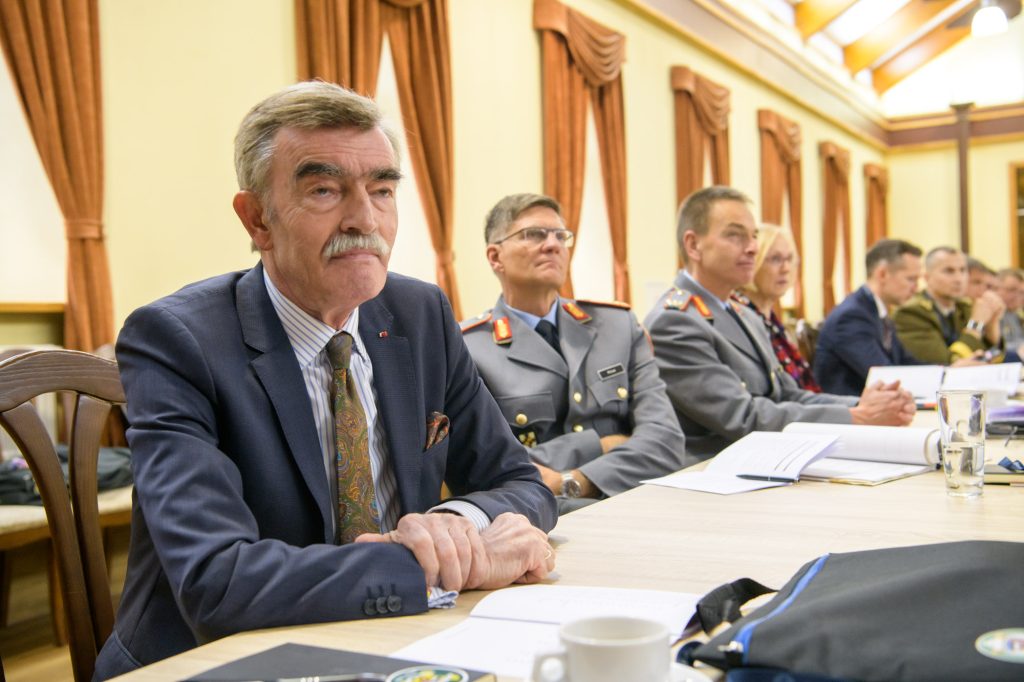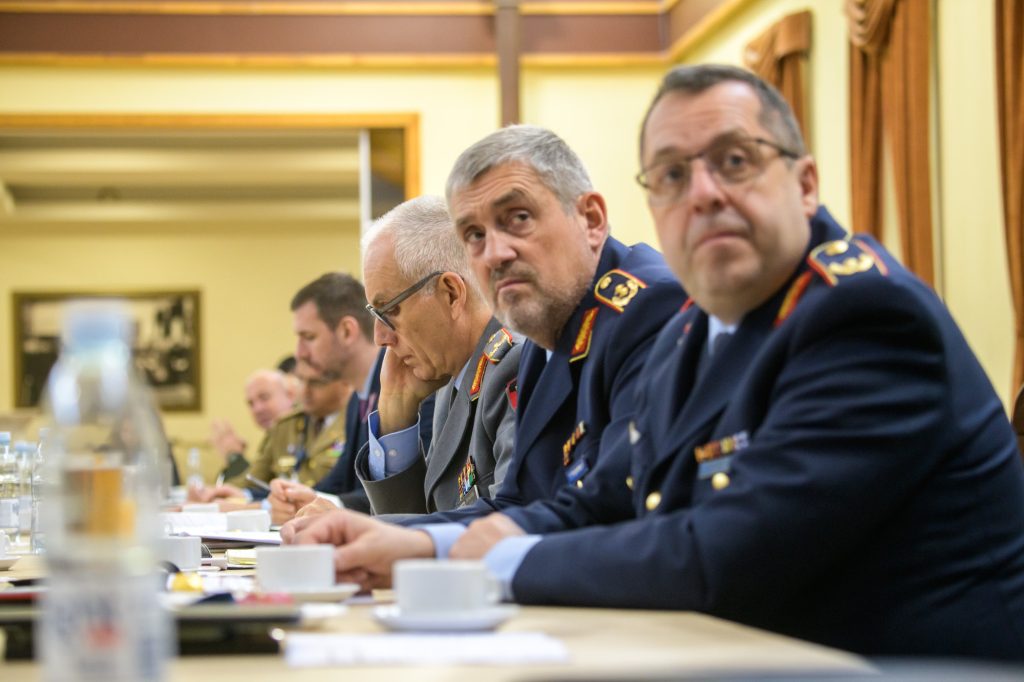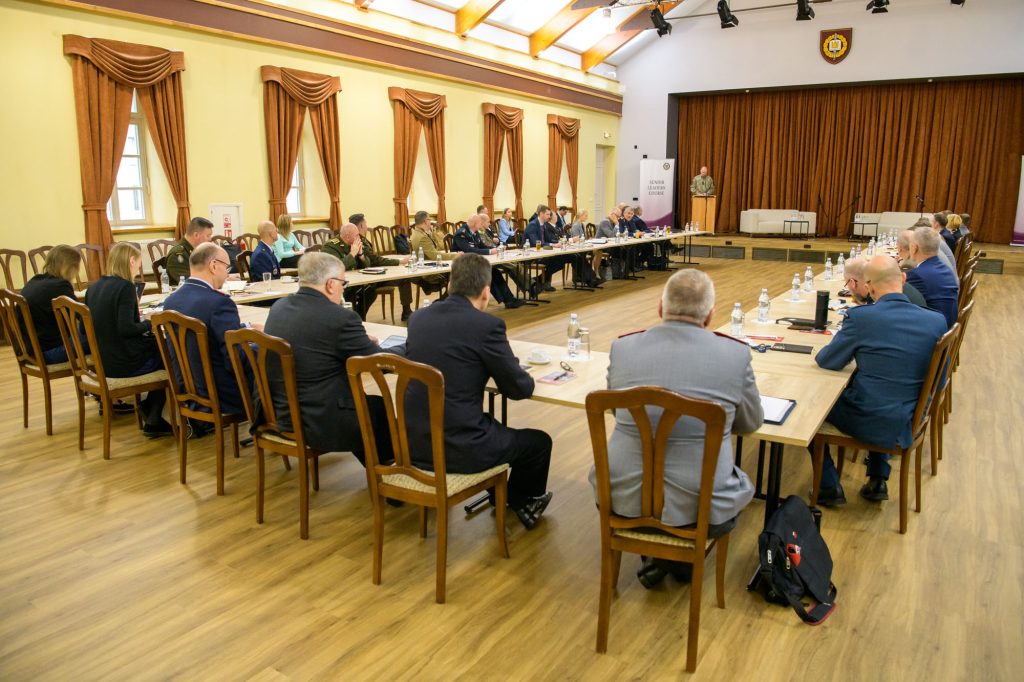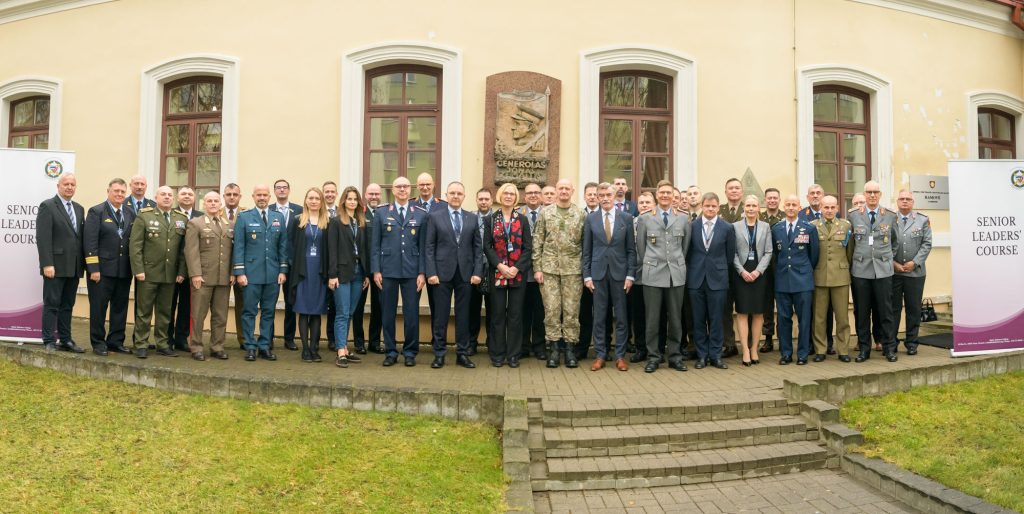
General Jonas Žemaitis Military Academy of Lithuania this hosts the Higher Command Studies Course co-organized by the Baltic Defence College and the Ministry of National Defence. It is an annual top level BALTDEFCOL course rotated among the Baltic capitals. It is co-organized by the German Military Academy this year giving representatives of 14 countries study in Vilnius for week.
Participants of the course will be discussing the most relevant aspects of NATO adaptation amidst the current security situation and security prospects for the Baltic Sea region.
The curriculum encourages course participants to examine the existing NATO strategy and policy for the Baltic Sea region security and defence and to share insights in the light of the threats posed to the Euro-Atlantic security by the Russian aggression in Ukraine.
Minister of National Defence Arvydas Anušauskas said welcoming the participants that such courses were an inseparable part of security cooperation: facilitating not just studies but also understanding and respect to each other’s’ concerns.
“One of the best advantages of this course is the possibility for representatives of different countries – neighbors, allies, partners – to come together. Let us make good use of it. I am convinced that the experience gained this week will deepen the perspective of your analysis of security challenge facing Lithuania and the Baltic states,” Minister said.
Commandant of the Military Academy of Lithuania Brigadier General Almantas Leika welcomed the participants and noted that the importance of taking the course has d been elevated. “The outlook on Russia is different as of this year, it is seen as a threat to the security of NATO Allies,” General pointed out and advised to focus in the discussions on what might be probable future developments, what security architecture might look like after the war in Ukraine. “After all, have we, as separate states and as members of international organisations, have done enough in the context of this conflict, what is it that we should have done different and is there still anything that we can do?”
The Course is carried out in debates on aspects of political and military NATO adaptation – what NATO deterrence and defence policy in the region is necessary, the response to hybrid attacks and feasible scenarios, what NATO could learn from Ukraine and what means to handle a military crisis could be.
The objective of the Course is to provide leaders with an opportunity to assess future challenges better through a wider strategic vision. The debates encourage the participants to exchange new ideas while focusing on the security problems in the Baltic Sea region.
Phot credit: Military Academy of Lithuania / E. Genys