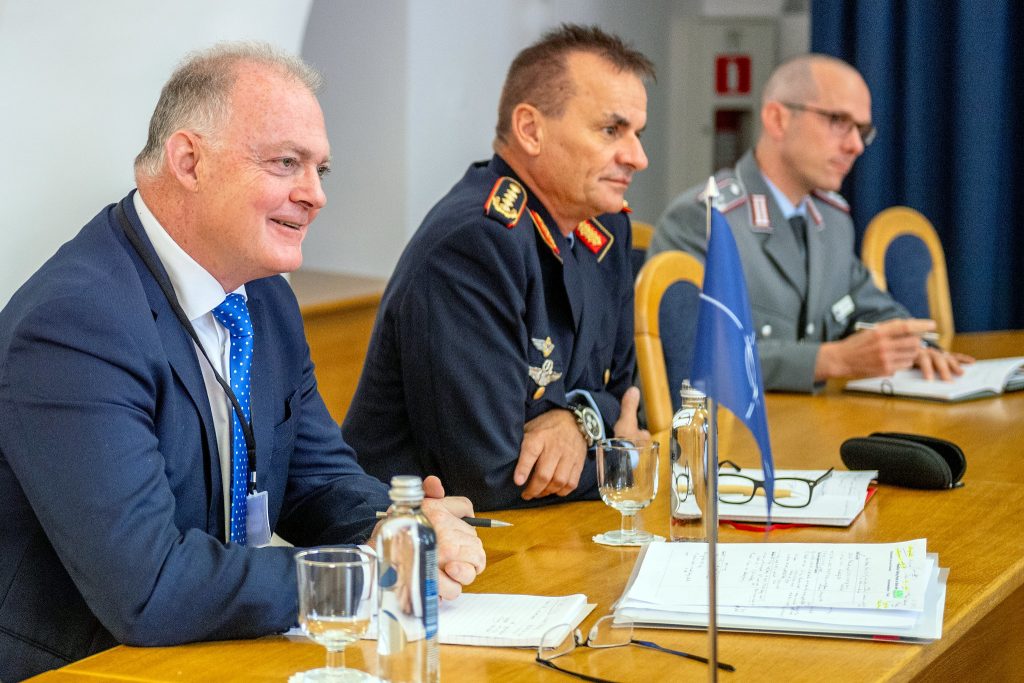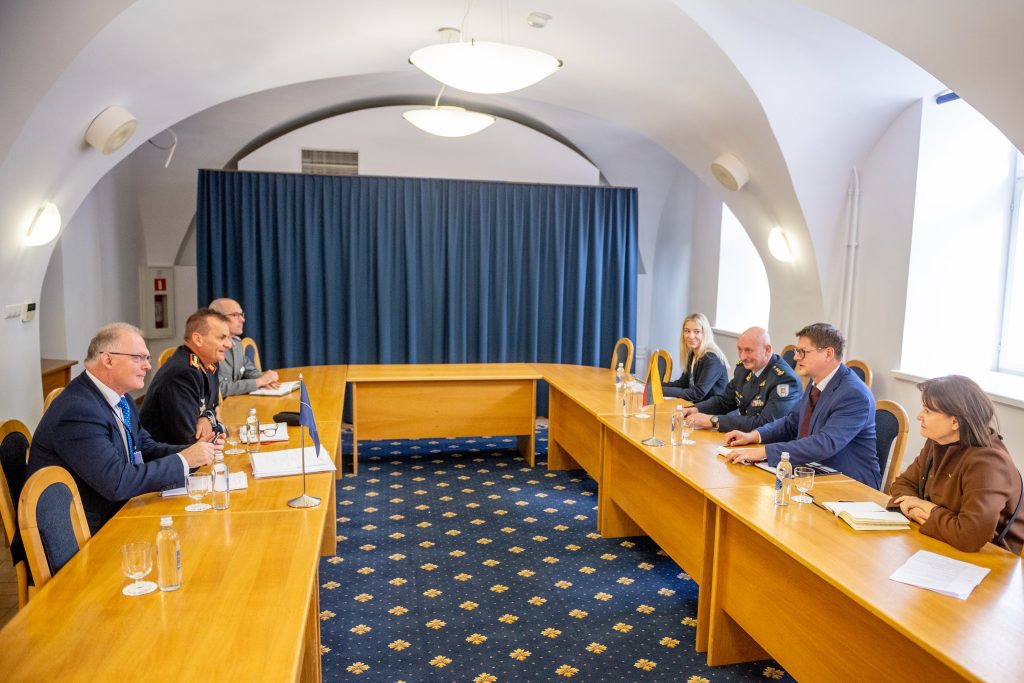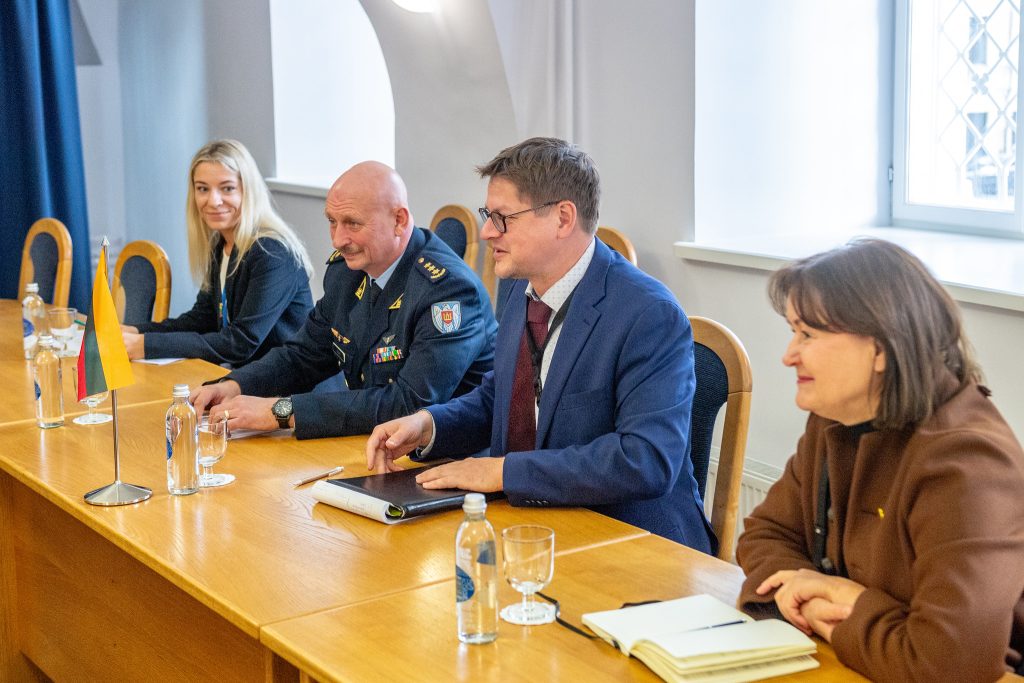
Vice Minister of National Defence Žilvinas Tomkus and other representatives of the Ministry of National Defence and the Lithuanian Armed Forces met with a delegation of NATO planning experts led by Director of the Policy and Capabilities Division in the NATO International Military Staff Karl Ford and Deputy Supreme Allied Commander Transformation General Chris Badia on a visit in Lithuania this week to carry out the assessment of the Lithuanian Armed Forces and civil preparedness institutions’ progress in meeting NATO requirements and to provide recommendations for further capability development.
NATO experts underscored growing defence budget and armed forces modernization in their conclusions. NATO is currently focussed on the means to enhance the response to the increasingly difficult security situation, ensure deterrence and preparedness for defence. Strengthening military capabilities is one of the top priorities which has ambitious goals set with regard to lessons learned in Ukraine.
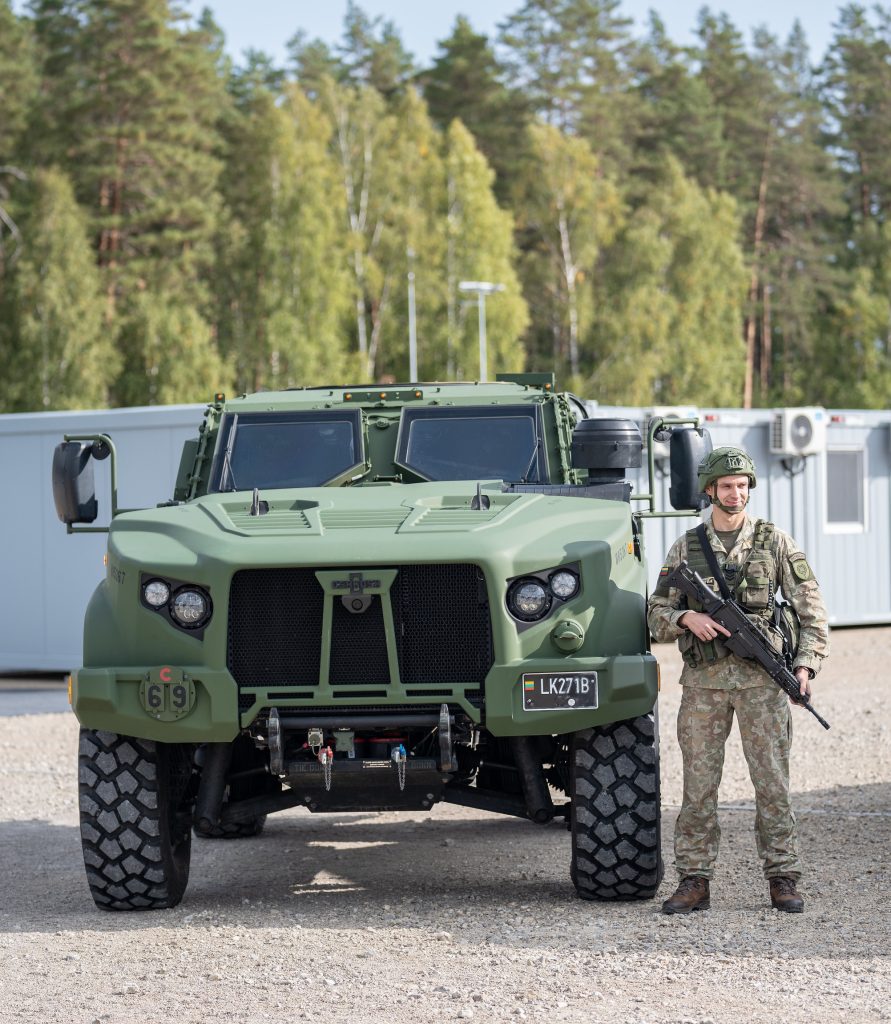
“One of the key things the NATO representatives highlighted is the importance of growth of the defence budget of Lithuania so that national plans are implemented and commitments are respected. The defence budget should continuously increase in order to fully deliver on the commitments to the Alliance and ensure Lithuania’s national aims. The experts also note the importance of modernization: our Armed Forces meet the high NATO standards. The procured advanced equipment adds capabilities never seen before in the Lithuanian Armed Forces and important for the whole Alliance,” said Vice Minister Ž. Tomkus.
The NATO representatives underscored the importance of increasingly heavier combat capabilities, fire power, stronger maneuver and force protection on the contemporary battlefield that should not, however, dwarf development of combat support and provision enablers, primarily, air defence, intelligence, combat engineer and logistical capabilities.
Yet another priority Lithuania takes seriously, speedy stockpiling ammunition of different calibers, was also lauded, especially in light of the current lessons of Ukraine.
The NATO experts viewed positively the rate of personnel growth in the Lithuanian Armed Forces as well. In their estimation, attractive conditions in military service have been created in the recent years: conscripts tend to choose to continue service as career military, while retention of this trend would ensure better readiness for national defence already in the nearest future.