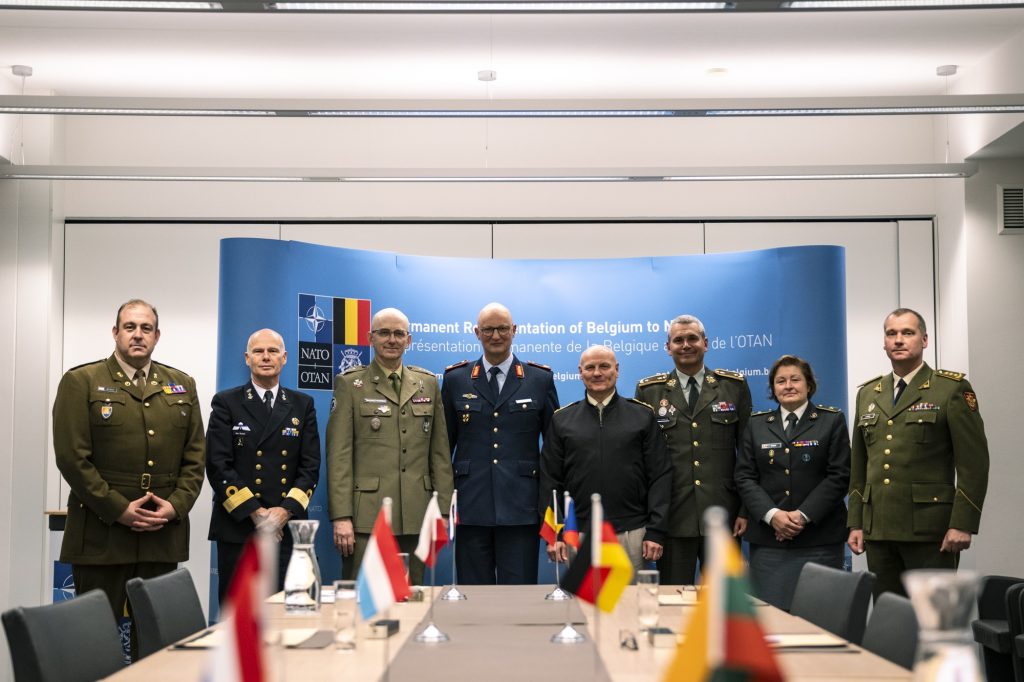
The Ministry of National Defence has signed a Letter of Intent regarding smooth military mobility in Europe. The document was signed by Lithuania, Belgium, the Czech Republic, Germany, Luxembourg, the Netherlands, Poland and Slovakia.
This is a step in the development of the Central North European Military Mobility Region (CNE MMA) which will result in standardized national border crossing procedures, coordination and joint monitoring of movement, efficient information exchange, synchronization of infrastructure development and interaction among the participating countries.
The current model Netherlands-German-Polish Corridor will be expanded to include Belgium and Luxembourg to the West, and Lithuania, the Czech Republic and Slovakia to the East. This would conclude the formation of a solid Central North European Military Mobility Region.
Lithuania takes concrete action as an observer to integrate in key multinational military mobility formats thus strengthening its strategic deterrence and defence posture. After the success as observer in the pilot Netherlands-Germany-Polish Military Mobility Project, Lithuania was invited to become a member of the Central North European Military Mobility Region (CNE MMA).
“Clockwork military mobility is Lithuania’s national priority. It is ensured through a continuous infrastructure development and coordination of mobility for a quick, safe and smooth movement of Allied forces. The central objective of Lithuania is to strengthen the element of infrastructure of the Eastern Flank Allies, particularly by means of the tight cooperation with the neighbors Poland and Latvia. This strategic objective will be implemented through different sources of financing, national and European development funds,” says Minister of National Defence Robertas Kaunas.
There are different infrastructure projects underway in Lithuania to ensure convenient military mobility. These include adjustment of the strategic Via Baltica for military purpose and the planned Lazdijai–Alytus–Vilnius road project to improve capacity in the Suwalki Gap. Significant investment is also targeted at improving the internal transport network required for connecting the home base areas with major training areas – Pabradė and Rūdninkai.
Seeking to strengthen regional security and secure strategic movement Lithuania and the other Baltic states plan establishing the Tri-Baltic Military Mobility Zone. The initiative will expand the Central North European Military Mobility Region northwards thus providing a continued space for smooth military movement which is critical for effective deterrence and security of the region.
Military mobility is a key element of modern defence. It determines effective, quick and safe transportation of troops, tactical equipment, weaponry, ammunition and stocks via land, rail, air and sea, – and requires streamlined, perturbation-free infrastructure, vehicles, legislation and logistics.