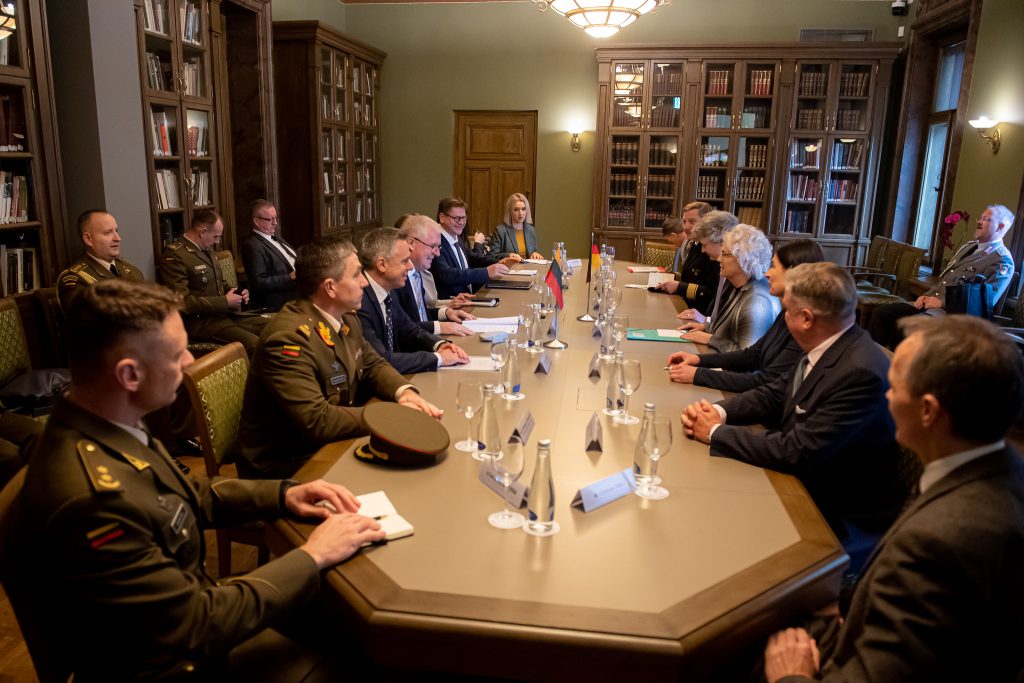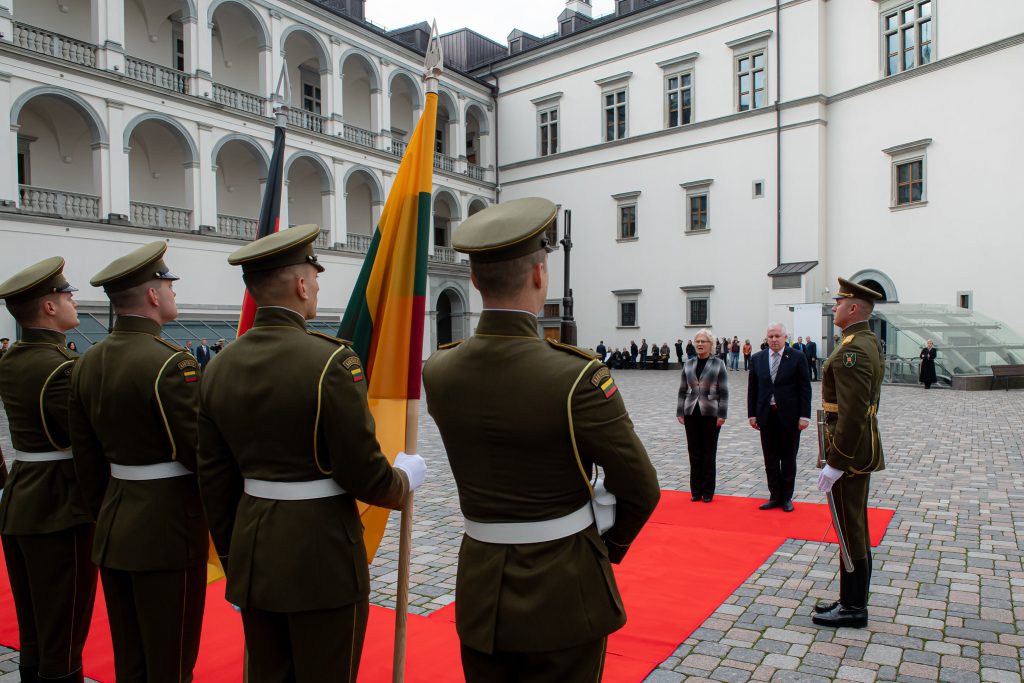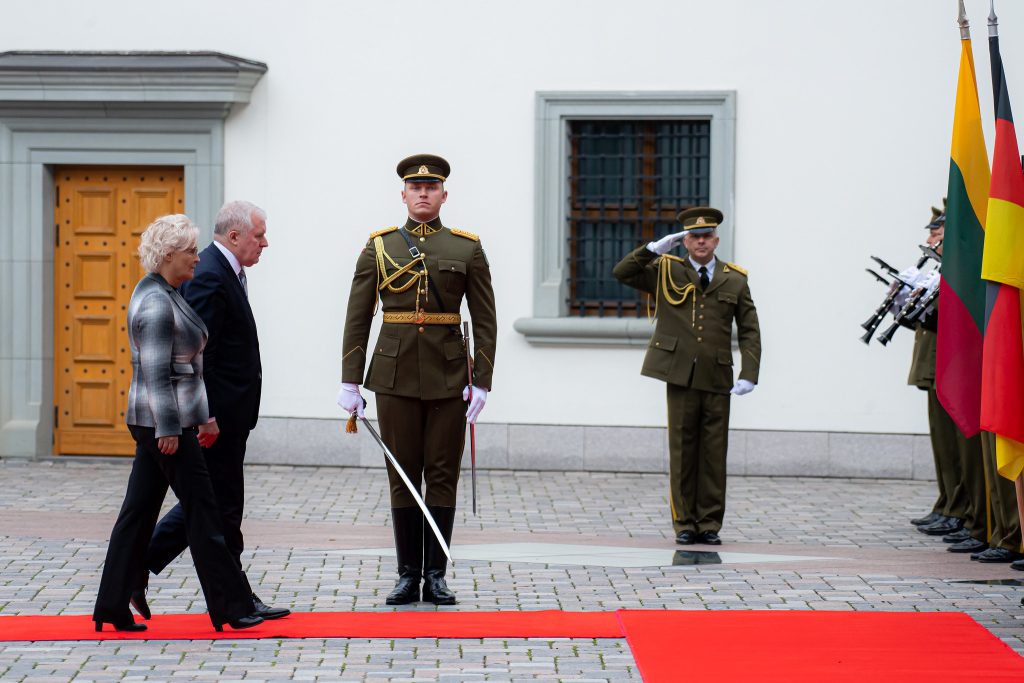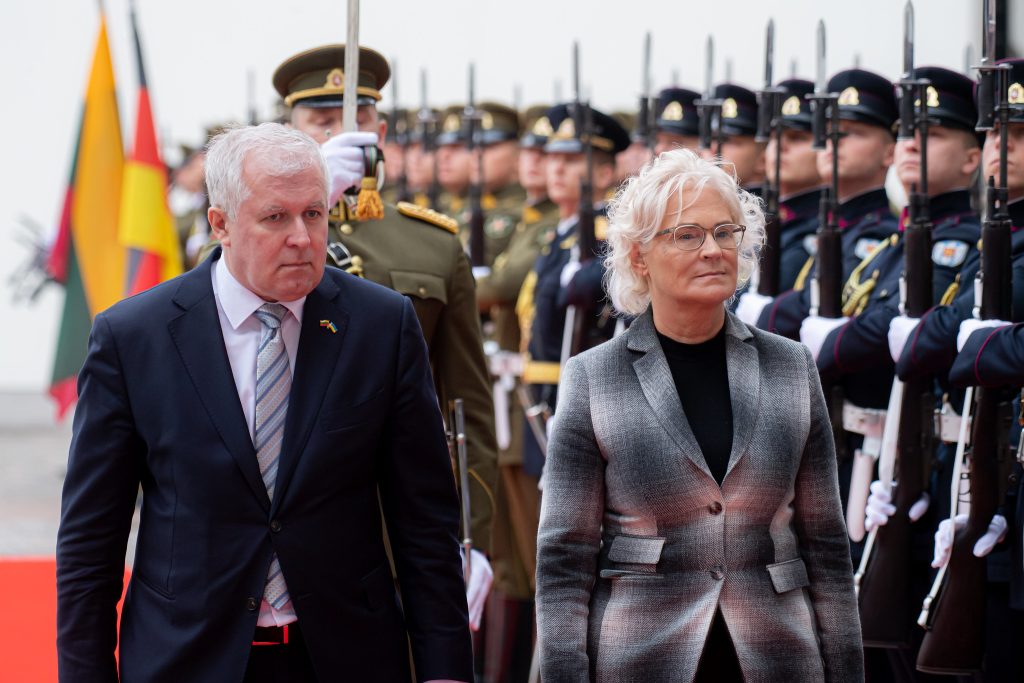
“The leadership Germany demonstrates by taking the decision to strengthen its forward presence in Lithuania and assigning an additional brigade-sized unit is a proof of its strong commitment to the security of the Baltic region. The Brigade Forward Command and Control Element in Lithuania has reached full operational capability and is ready for all its tasks. It is the first and a critical step in both, political and military terms, in implementing the decisions of the NATO Summit in Madrid,” said Minister of National Defence Arvydas Anušauskas officially welcoming Federal Minister of Defence of Germany Christine Lambrecht to Lithuania on October 8.
At the bilateral meeting at the Palace of the Grand Dukes of Lithuania in Vilnius the Ministers discussed key aspects of cooperation and assistance to Ukraine and proceeded to inaugurate the German Brigade Forward Command Element in Rukla deployed since September and observed the first exercise of Brigade personnel at Gaižiūnai Training Area. According to A. Anušauskas, the scope and complexity of the exercises will only grow in the future.
“We are thankful to Germany for enhancing its military presence in our country in defence of Alliance principles, values and security of our people, today and in the future. The German leadership not only demonstrates Alliance solidarity but also sets a good practical model for other nations. Today the threat of Russia doesn’t raise any doubts to anyone anymore, the threat is direct and long-term, therefore enhancement of NATO military capability and allied presence in the region is critical,” said Minister A. Anušauskas.
As part of implementation of the decisions on strengthening deterrence and defence in the eastern part of the Alliance taken at the NATO Summit in Madrid, the German 41st Mechanized Infantry Brigade Forward Command Element was deployed in Rukla. The first exercise of the Brigade has just been held in Lithuania to mark its Full Operational Capability milestone. Troops of the 413th Jäger Battalion with equipment are training at Rukla with King Mindaugas Hussar Battalion. Capabilities of the German Brigade will be deploying to Lithuania for exercises and training on a regular basis, Lithuania is also developing infrastructure looking to hoist the Brigade in full in the future.
“Minister Ch. Lambrecht and I are prepared to continue working together to meet the needs of the German forces by hosting a brigade-sized unit in Lithuania in full as quickly and in high quality as possible. I have pointed it out to the Minister that improvement of Host Nation Support and services for the Allied capabilities remains high of our agenda. Lithuania is prepared to ensure its part of conditions necessary for the presence of Germany and other allies in Lithuania, to render all the Host Nation Support necessary, develop and expand military infrastructure and training ranges. Germany invests significantly in military infrastructure developed in Lithuania s well,” said A. Anušauskas.
The German enhanced Vigilance Brigade in Lithuania is a bilateral agreement between Lithuania and Germany made in implementation of NATO decisions taken in the wake of the Russian war in Ukraine. Germany has been substantially contributing to deterrence in the region for years as the framework nation of the NATO enhanced Forward Presence Battalion Battle Group Lithuania in Rukla formed in 2017, also by investing In military infrastructure in Lithuania and contributing to modernization of the Lithuanian Armed Forces. The German commitment to Lithuania’s security sends a clear signal of NATO unity to the aggressor. Allies enhance military presence in Lithuania and other countries in the region to make sure any aggression against the eastern flank of NATO is deterred. That also demonstrates high NATO readiness and resolve to defend every inch of the Alliance’s territory. The German Brigade has been assigned to Lithuania as part of the long-term defence posture of NATO with closer tie between NATO militaries and integrated defence plans in view.