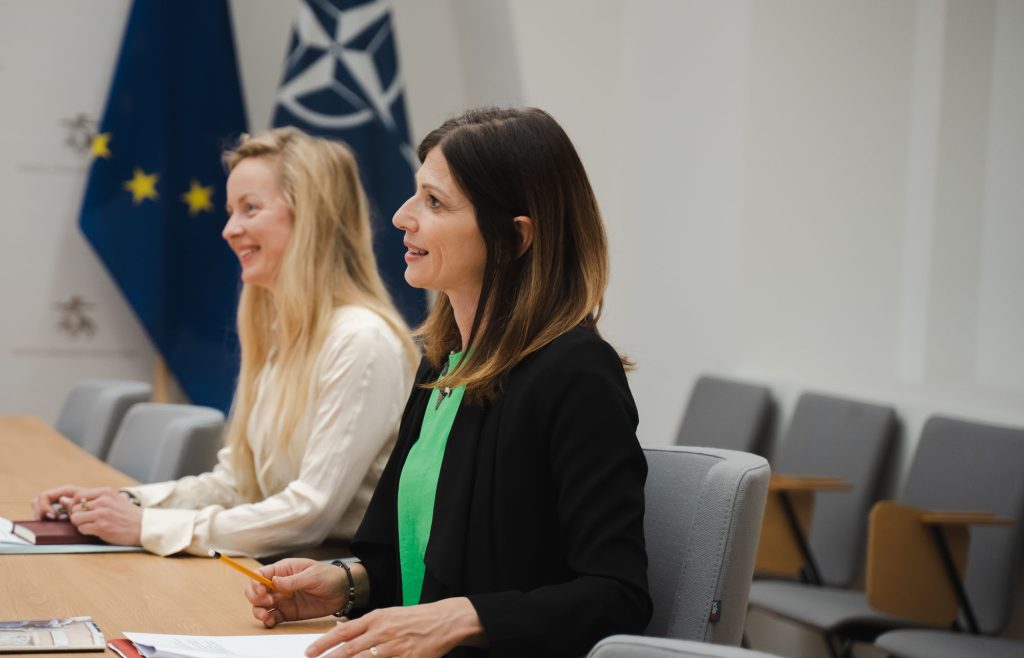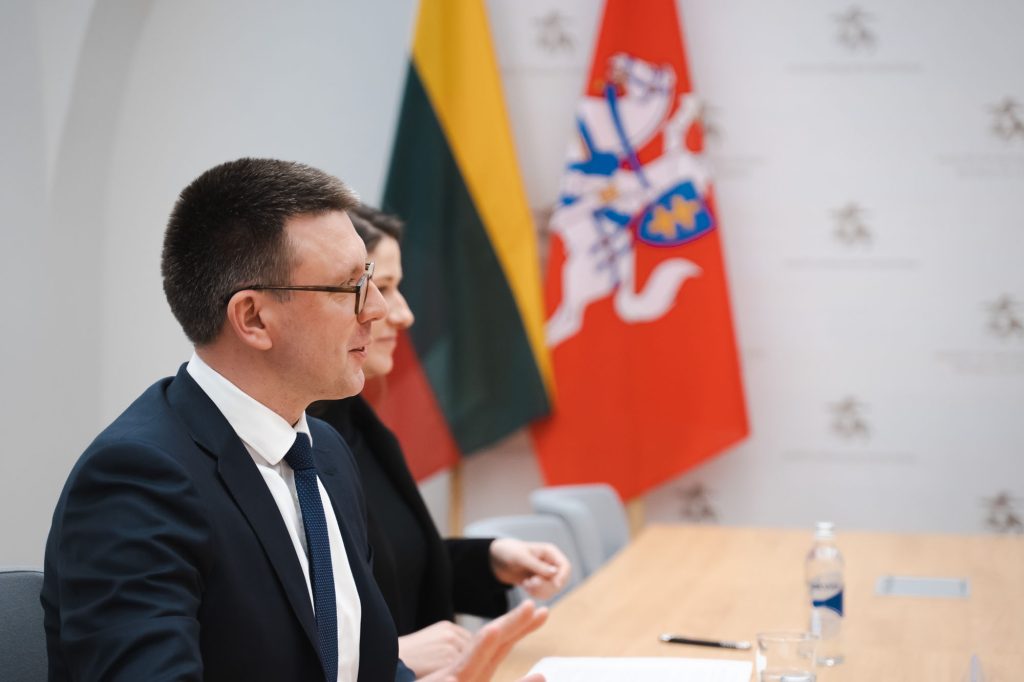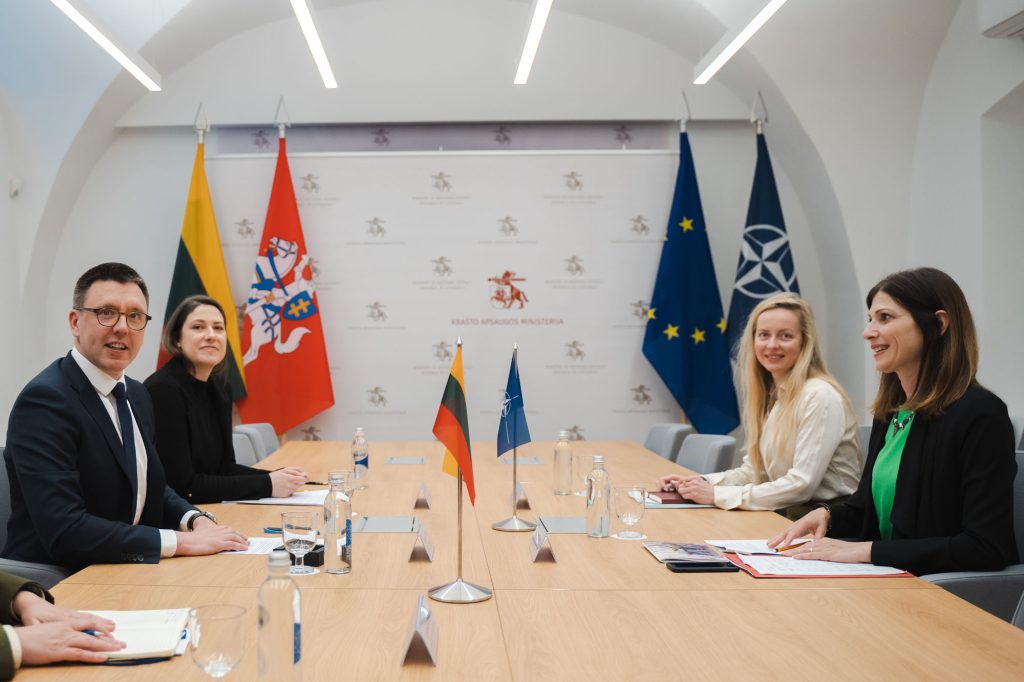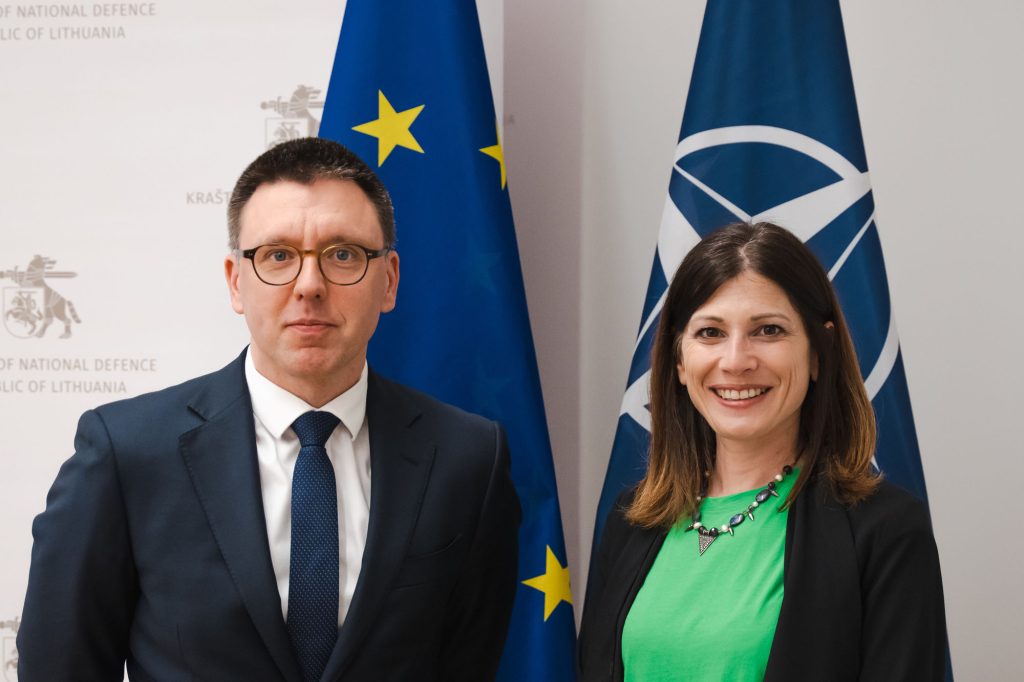
Equal opportunities is an integral part of effectiveness of the Lithuanian National Defence System. Vice Minister of National Defence Žilvinas Tomkus made that point discussing women’s role in ensuring peace and security with NATO Secretary General’s Special Representative for Women, Peace and Security Irene Fellin who visited Lithuania on May 30.
The officials discussed objectives of the United Nations Security Council Resolution 1325 (2000) on Women and Peace and Security. The document binds nations to ensure more involvement of women in conflict prevention, management, solution and peace-building mechanisms. The Ministry of National Defence has been developing tools for implementation of the resolution since 2012.
“We are implementing the Resolution by ensuring a comprehensive education on the matter in the National Defence System, by incentivizing civilian and military female personnel to be active in the various screenings and contests, and we are collaborating with Lithuanian and foreign partners,” says Vice Minister Ž. Tomkus.
In 2021 there were 11,8 percent of women out the total of strength of the Lithuanian Armed Forces, and 45,7 percent across all civilian and military positions of command in the National Defence System. There are no artificial gender-based limitation at the National Defence System: women and men can enjoy equal opportunities to seek any position, get equal pay, social securities, etc.
I. Fellin thanked for the work Lithuania has done on the area and also discussed with Vice Minister regional security, assistance to Ukraine and preparation for the NATO Summit. Vice Minister Ž. Tomkus underscored that the Alliance need the concept of forward defence to be implemented because Russia as a long-term threat could not be shown that NATO borders were protected any other way. Corresponding decisions to strengthen the defenses of the eastern flank of NATO are expected to be taken at the upcoming NATO Summit in June in Madrid.
Following the meeting with Vice Minister, I. Fellin ppaid a visit to Rukla and met with NATO enhanced Forward Presence command. The current NATO eFP rotation includes 80 women , the average across all rotations is 15 percent of women. Part of that percentage occupy positions of command.