


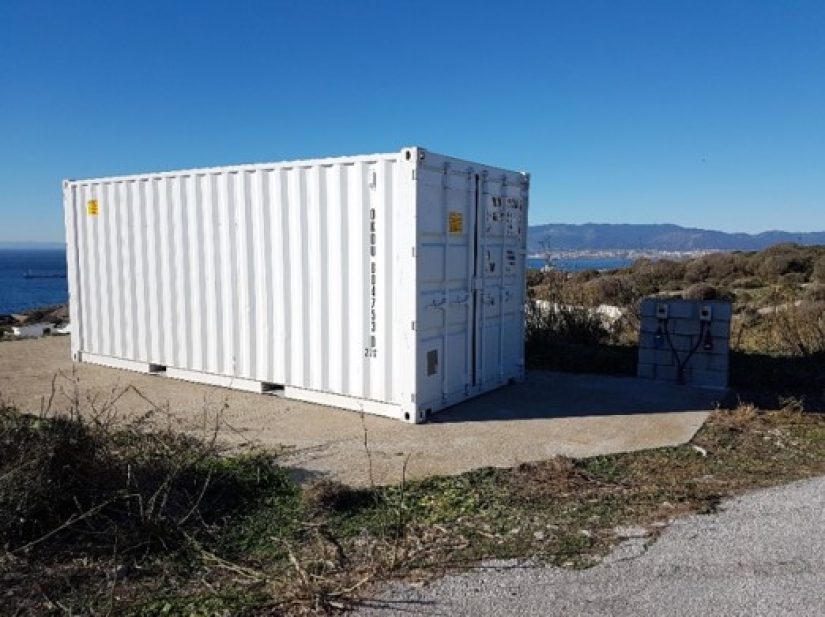
The Ministry of National Defence and the U.S. Department of Defence have started cooperation in the field of radiological environmental monitoring. Transportable monitoring equipment have been delivered to the General Silvestras Žukauskas Training Area of the Lithuanian Armed Forces in Pabradė earlier this month. Once installed, it will be used to measure changes in the levels of radionuclide background in the atmosphere.
“This project opens a new stage of bilateral cooperation with Lithuania’s strategic ally, the United States of America. The monitoring equipment will facilitate the cooperation between our countries at a scientific level, via exchange of experience and knowledge in the field of radiological monitoring. It will also enhance our ability to respond respectively to traces of radioactive pollution in the region, the more so – since the Astravets Nuclear Power Plant has been made operational,” the Minister of National Defence Arvydas Anušauskas said.
“We greatly value our long history of cooperation with Lithuania on enhancing nuclear safety and security,” U.S. Ambassador Robert Gilchrist said. “The installation of this equipment is the latest step in such collaboration and furthers our already robust technical relationship on matters of nuclear safety and security.”
To date, 43 RADIS radiological threat early warning posts (https://www.rsc.lt/radis/) are operating throughout the territory of Lithuania, the data they collect is made publicly available daily. Deployment of this specific equipment by the Defense Threat Reduction Agency significantly enhances Lithuanian national monitoring and early warning capabilities to detect and quickly respond to potential higher-than-normal radionuclide readings in the region. The project is being implemented in close cooperation with the Radiation Protection Center, which is Lithuania’s regulatory authority responsible for radiological monitoring and early warning of nuclear and radiological emergencies.
The precision systems, which can detect trace amounts of radioactivity released from sources thousands of kilometers away, have performed similar background measurement campaigns in locations such as Gibraltar, Japan, and Burkina Faso. This measurement program is planned to run for at least a year.
The U.S. equipment detects radioactivity, specifically, trace amounts of radioactive isotopes of xenon produced in nuclear reactions and other radionuclides in the atmosphere. It also monitors changes in the levels of such particles in the background radiation. The readings allow the assessment of the condition of nuclear plants or other nuclear objects in the area.
Photo credits: Defence Threat Reduction Agency


