


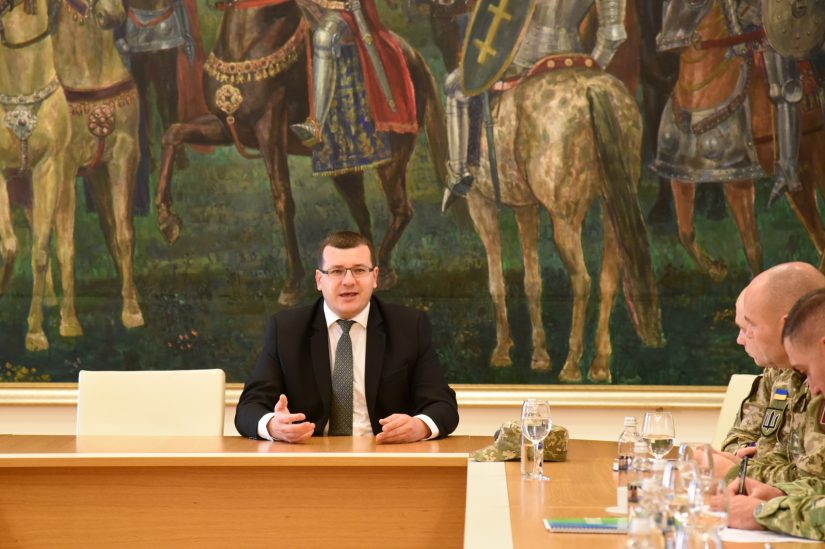
On October 14 Vice Minister of National Defence Edvinas Kerza met with students of the Join Command and General Staff Course of the Baltic Defence College (BALTDEFCOL) on a visit in Lithuania and discussed topical aspects of defence policy.
Following the annual traditions, the students arrived to familiarise with institutions of the Republic of Lithuania, and political and strategic situation in the region. Their visit is three days long this year and includes visits to the NATO enhanced Forward Presence Battalion Battle Group in Rukla, Lithuanian Air Force Base in Šiauliai.
About the Baltic Defence College (BALTDEFCOL)
The Baltic Defence College is one of the most successful projects of cooperation of the Baltic countries providing operational and strategic level officer and civilian training. It is also the only military education institution established jointly by NATO allies in continental Europe that offers officer-level education in English. BALTDEFCOL is appreciated by our allies across NATO.
The Baltic Defence College trains staff officers and civilian personnel of the Baltic and other countries according to the following academic programmes: for general staff, for civil servants, and for higher command personnel. Most of the unit commanders in the Lithuanian Armed Forces are BALTDEFCOL graduates.
The Baltic Defence College is open for both, NATO and EU countries’ officers and officers of the Partnership for Peace Programme. Lithuania supports military students from Georgia, Ukraine and Moldova studying at the Baltic Defence College and thus facilitates a closer NATO cooperation with the Eastern European countries and gives the students the opportunity to take in best practices of NATO countries while studying together with their colleagues from there.
Higher Command Studies Course is a strategic level BALTDEFCOL course delivered in English. It is attended by civilian personnel and military officers of national defence systems of different countries, including Lithuania, occupying positions of leadership, typically holding the rank of lieutenant or lieutenant colonel if military. The 5-month long course prepares students for decision-making at a complex international environment and trains resourceful and pro-active leaders, policy-shapers and commanders.
Photo credits: Giedrė Maksimovicz (MoD)


