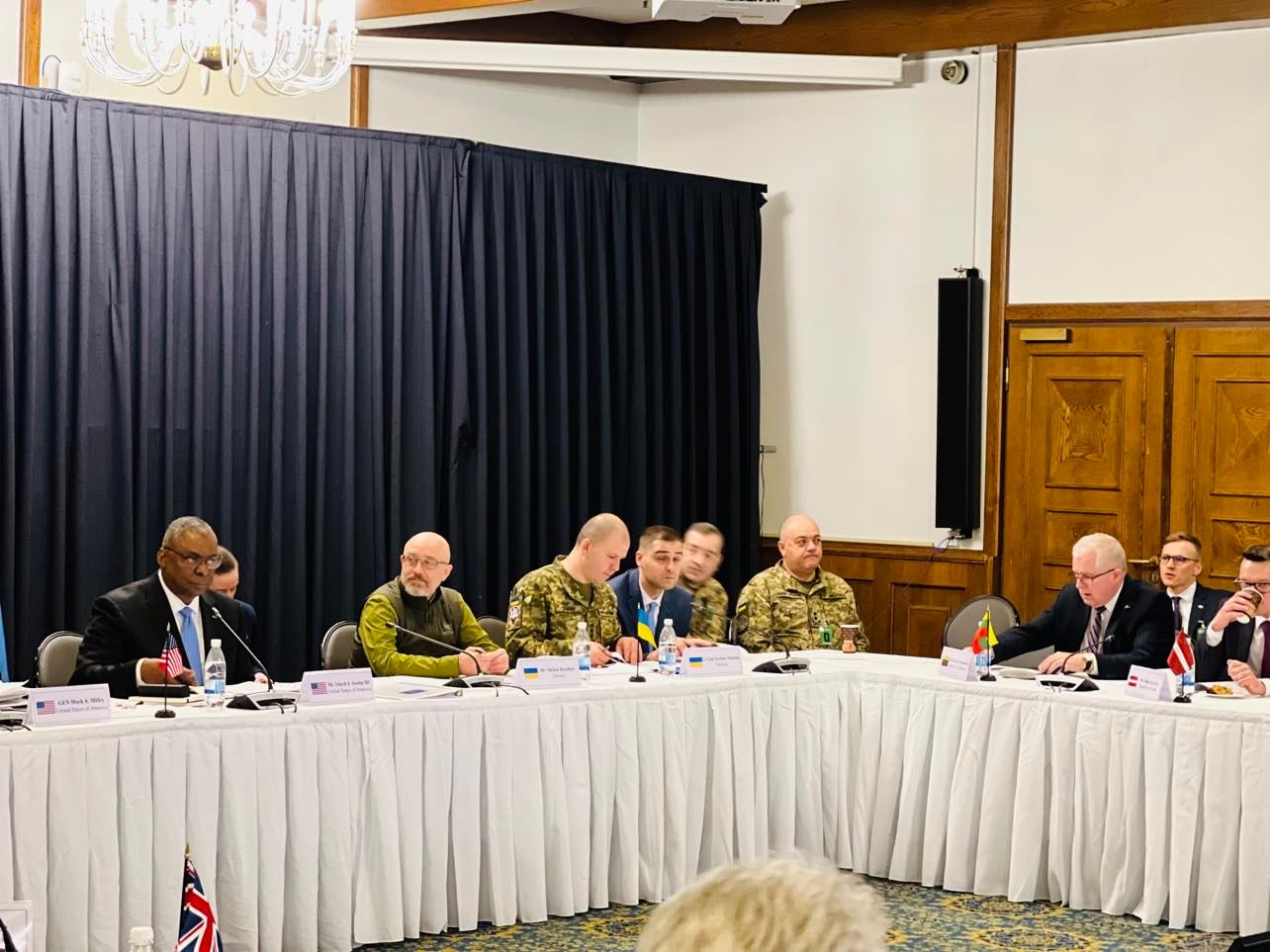
“It is unlikely that Russia will end its war any time soon, which is why, together with our Allies, we need to develop a programme to reinforce Ukraine’s Armed Forces, ensure rearmament and respond effectively to the country’s basic needs,” says Minister of National Defence Arvydas Anušauskas. On April 26 he attended a meeting of the Security Consultative Group on strengthening Ukraine’s military capability and its long-term security needs at the U.S. Ramstein Air Base in Germany.
U.S. Secretary of Defense Lloyd J. Austin invited Ministers of Defence and high-ranking military representatives from 40 partners, both, NATO allies and other countries that have a close cooperation with the U.S., such as Australia and Japan. The conference focussed on the best ways to reinforce the military capability of Ukraine facing the Russian aggression immediately and also when the war is over. According to A. Anušauskas, Lithuania is transferring to Ukraine all of its stocks it can.
“Lithuania first supported Ukraine with armament even before the war began – we transferred the Stinger systems and managed to complete the training on using them before the war was started. When the aggression broke out, Lithuania’s support arrived in Ukraine third day in. To date, Lithuania has provided assistance for up to EUR 100 million,” Minister says.
A. Anušauskas underscored that Lithuania was not only providing military support but also had the Military Training Mission in Ukraine from 2017 to the very beginning of the war – and it now essentially has entered a new phase because Ukrainian troops are trained in Lithuania to use Western equipment. Minister invited allied instructors to join in.
Other topics discussed were the recent offensive actions of the invading Russian army in the east of Ukraine. According to A. Anušauskas, the Russian threat and hostile approach to the European security and, particularly, the Baltic region will remain significant and enduring. Minister communicated to the Allies that Lithuania addressed the issue by significantly increasing defence spending and defensive capabilities, and requesting reinforcement to NATO’s eastern flank from the Alliance.