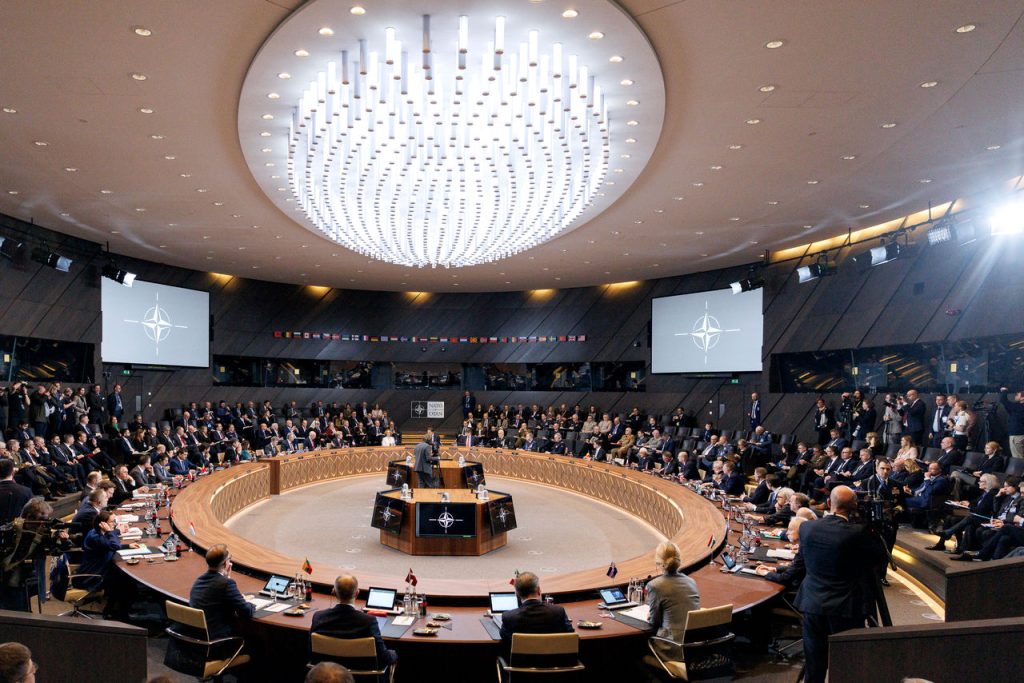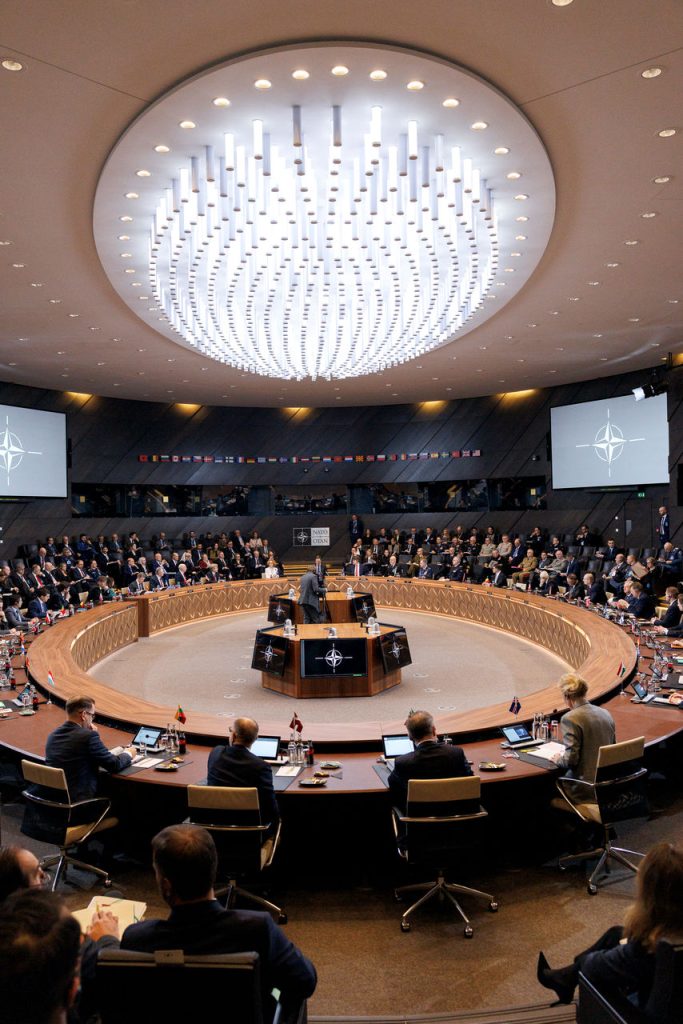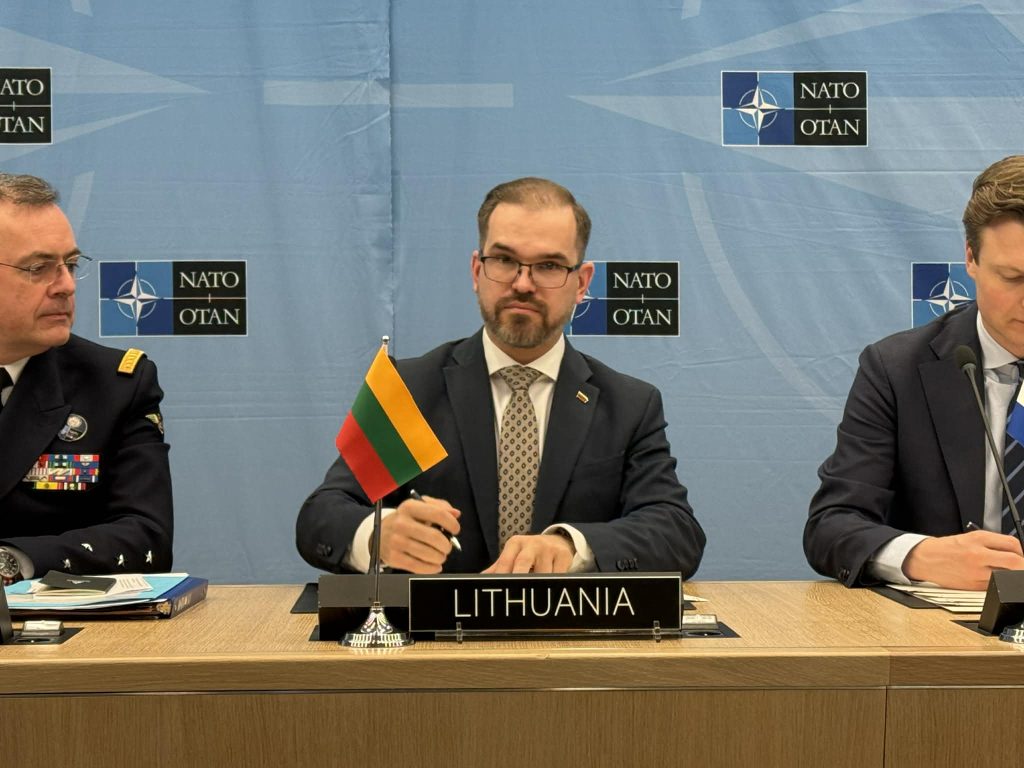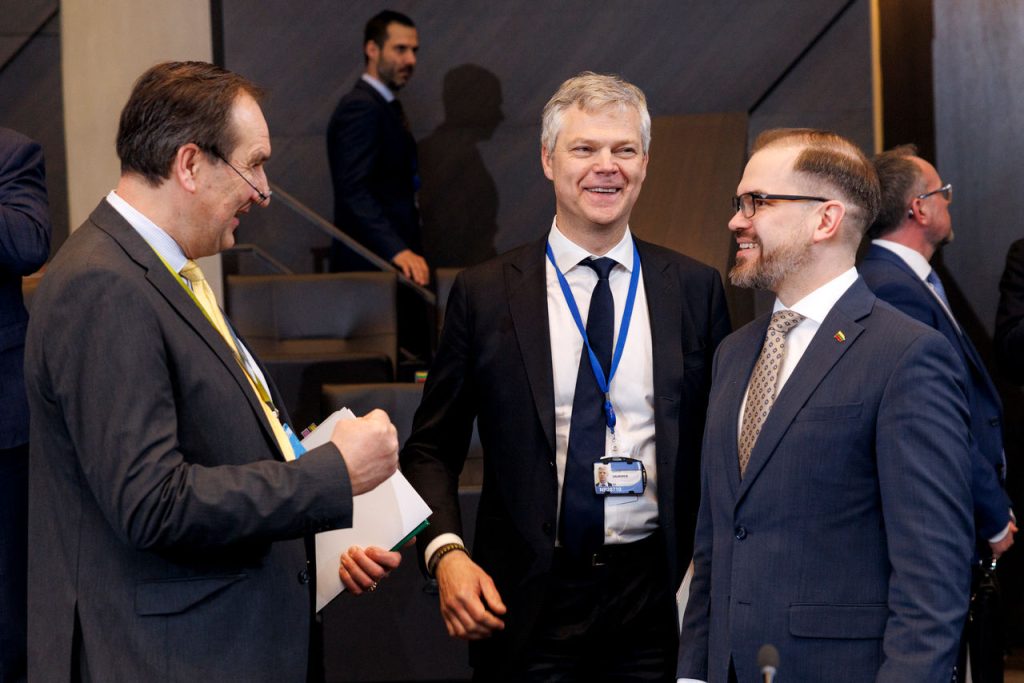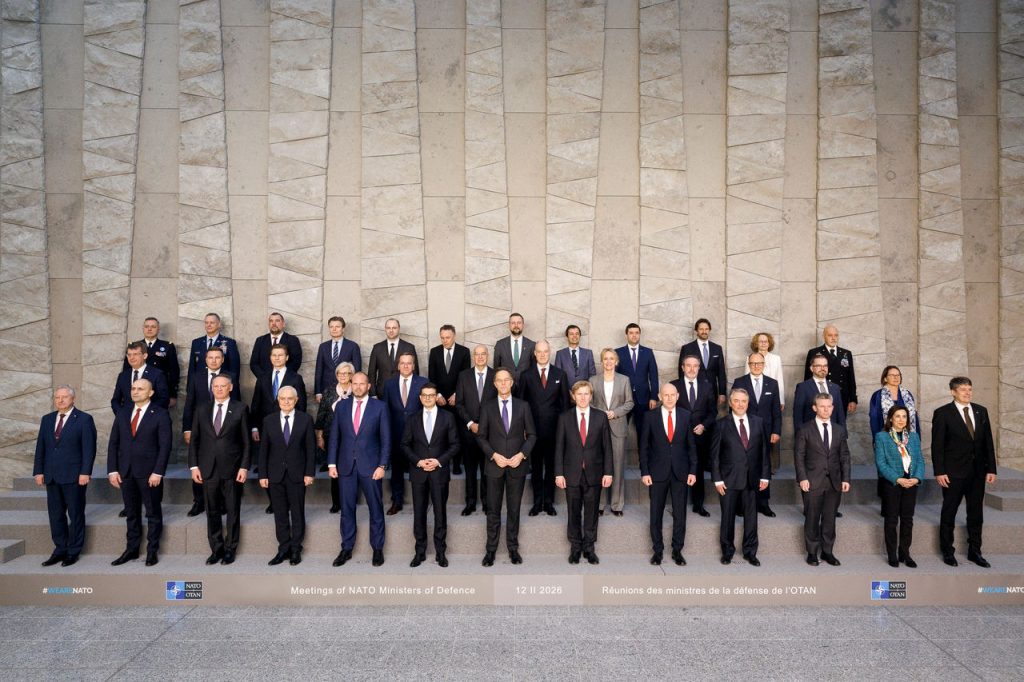
Today, Minister of National Defence Robertas Kaunas takes part the NATO Defence Ministers’ meeting in Brussels centered on measures for strengthening NATO’s deterrence and defence and agenda of the upcoming NATO Summit. Another highlight of the meeting is long-term assistance to Ukraine.
“Lithuania dedicates 5.38 percent of GDP for defence, more than anyone across NATO. This is leadership and a sign we have to shoulder the burden of NATO security collectively. In their turn, other Allies need to take more responsibility and financial burden all NATO Allies because russia only speaks the language of force. We need to pump up the muscle and speak it so that the aggressor understands and is deterred,” Minister of National Defence Robertas Kaunas said in Brussels.
Defence Ministers also signed a Letter of Intent on NATO Task Force X for developing and implementing long-range strike capability and uncrewed system technology. The initiative focuses on developing uncrewed maritime system capability to safeguard critical infrastructure by means of surveillance, monitoring and generation of maritime recognized picture. The Lithuanian Navy joins the initiative to seize the opportunity of improving the skills, learning from the Allies, and also contributing to the collective NATO effort to strengthen the maritime security.
Minister also underscored the anticipation of the new NATO Air Defence Plan for addressing the threat posed by russian and hybrid attack drones more effectively to be unveiled at the Summit.
When speaking about developing NATO defence capabilities, R. Kaunas noted that Allied capabilities needed to be developed comprehensively and to make russia face strategic dilemmas, thus ensuring effective deterrence and defence.
Ministers also discussed the agenda of the upcoming NATO Summit, assistance to Ukraine and themes of Lithuania’s upcoming Presidency of the Council of the EU.
The NATO-Ukraine Council met on the margins of the NATO Defence Ministerial. At the meeting, R. Kaunas highlighted the importance of ensuring a timely and sufficiently effective weaponry supply which would help Ukraine to achieve battlefield advantage as assistance is rendered to the country defending the European and own security.
Lithuania supports Ukraine on the basis of an annual 0.25 percent of GDP long-term aid commitment at the minimum. Since the start of the aggression against Ukraine in 2022, Lithuania has delivered military assistance worth of over EUR 1 billion so far.
Photo: courtesy of NATO